
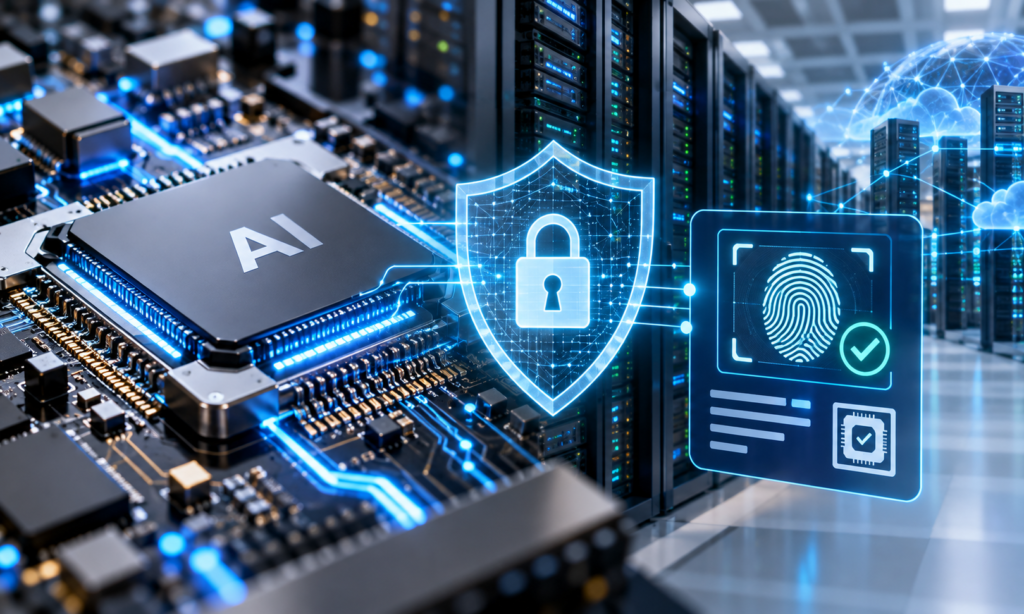
In 2026 artificial intelligence is driving the growth of data centers which in turn is raising demand for GPUs, special purpose processors, high speed networks, and advanced storage solutions. Also as IT infrastructure scales up we see that organizations must protect not only what is digital, their software, data — but also the tangible resources that support AI functions.
AI hardware authentication is growing in importance as a security feature which goes into play for each connected element that we add to the system. We see unauthorized devices, compromised firmware, and fake components as threats to infrastructure reliability. By implementing hardware identity we are able to report and react to these issues which in turn helps us to have greater control over very complex IT environments.
AI ecosystems are redefining infrastructure security.
Modern AI data centers house large clusters that are in constant communication with each other which include a few thousand processors each. These systems perform difficult training tasks, run inferences, and also deal with private enterprise info.
Traditional security measures mostly look at networks, applications, and user auth. But software protection by itself does not guarantee that the hardware is trusted.
Physical assets now require digital trust.
Hardware identity verification which ties physical devices to their digital credentials. Cryptographic identities, secure boot processes, and trusted platform solutions which determine if machines meet the set security criteria.
For instance a server may present what is in effect proof of its firmware config before access is given to protected workloads. This in turn reinforces security measures which in total do not however fully protect from state of the art hardware threats which break such models.
Five security measures related to hardware verification.
Organizations that wish to improve the security of their AI infrastructure may put in place a variety of security measures which work well together.
- Cryptographic hardware identities
- Secure firmware validation
- Remote device attestation
- Authorized component registration
- Continuous integrity monitoring
Each different security issue is addressed by a separate mechanism. For device authentication we have cryptographic identities and for making sure that only the right software is present we have firmware validation. Also remote attestation gives out the proof which security systems use to determine if the security policies are being followed.
Combining these control elements which may include various technologies and business practices creates more robust validation processes as compared to the use of a single technology.
GPU infrastructure has new authentication measures.
AI works in large scale GPU clusters which are connected by high performance networks. In such environments we see the exchange of model parameters, training info, and processing results between many computing nodes.
As companies grow and add to their set of facilities, it is of great importance that hardware identification remains the same.
Remote attestation proves device integrity.
Remote attestation reports into verification services the cryptographic proof of a hardware platform’s configuration or state of operation. We then compare this proof with a trusted baseline.
If a device doesn’t pass verification, admins can look into config changes or we may just put in place measures to prevent access to certain sensitive environments. Also note that each hardware vendor has different attestation features and also that which components are verified isn’t an indication that a full system is free of vulnerabilities.
Hardware refresh puts strain on identity management.
Large in size data centers we see that we have to replace failed processors, storage devices, networking components and also full computing nodes which is a very regular occurrence. Each time we do a replacement we add to our inventory of parts and also we see an increase in security management issues.
In the absence of structured enrollment processes admins may have trouble telling authorized replacements from unexpected equipment changes. By associating hardware identities with procurement records, maintenance logs, and device inventories we see that which improves operational accountability.
Supply chain security is now a requirement.
AI infrastructure is a result of complex global manufacturing and distribution networks. Parts may travel through many different entities before they get to production data centers.
This process which in turn produces unauthorized changes, documentation errors, and firmware manipulation. Also hardware verification may supplement supplier reports with technical data which reports on what is supported.
Trusted records of manufacturing Improve Component Accountability.
Manufacturers issue what is required in terms of crypto credentials to supported devices at the time of production. Also it is up to organizations to use these credentials in connection with published supply chain info to determine equipment provenance.
However at present we do not see which manufacturing or distribution events a credential covers. For effective supply chain assurance we also require supplier oversight, secure logistics, inventory reconciliation, and investigation procedures.
Zero Trust for Physical AI devices.
In a Zero Trust model organizations do not assume internal network nodes to be friendly and instead check each access request.
In AI data centers this applies to servers, management controllers, and supported hardware components. Also security policies may include device identity and attestation evidence before we grant access to protected computing resources.
Hardware Proves in Workload Authorization.
Infrastructure which has in place security assessment tools is able to check hardware security attributes prior to the run of sensitive tasks. If devices do not meet the mark they may go through remediation which once completed will grant them authorization.
Organizations put in place such controls thoughtfully as they may disrupt legitimate computing functions. Also of great import are reliable recovery procedures, credential protection, and clear exception policies.
Five main focus areas in Secure Hardware Deployment.
Data center providers may improve their hardware verification processes with the implementation of consistent operations.
- Maintain verified asset inventories
- Protect cryptographic identity credentials
- Validate approved firmware versions
- Investigate unexpected device changes
- Document attestation recovery procedures
These programs integrate technical verification into everyday infrastructure management. While automation may do a great job at performing routine administrative tasks, security teams still require solid procedures for which to address suspicious activity and sort out issues related to real equipment failure.
Standardised Verification may simplify Multivendor Infrastructure.
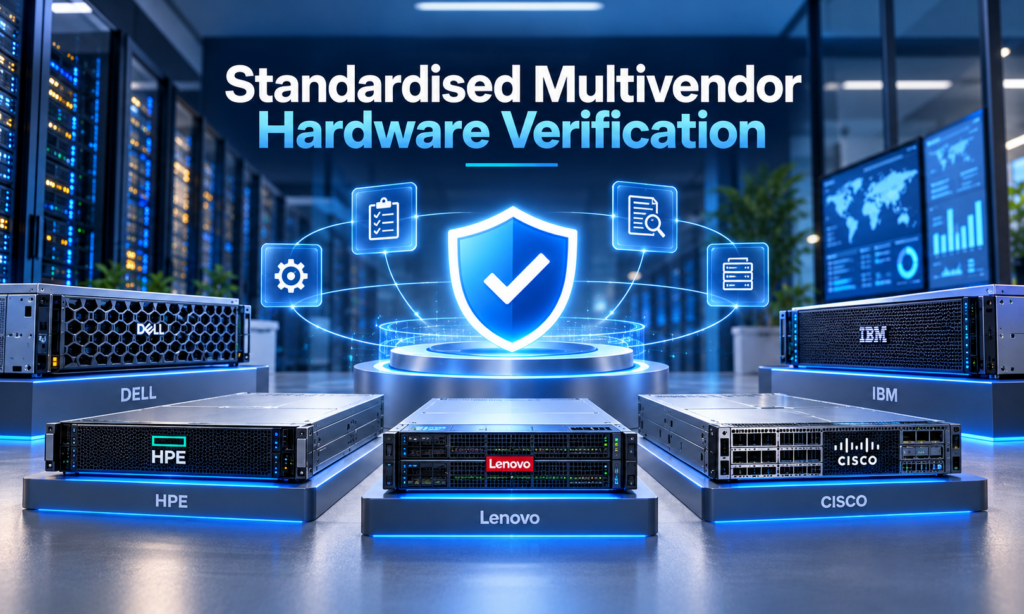
AI data centers may use products from many different vendors. Also we see that security features, credential types, and attestation protocols are different which in turn causes issues with integration.
Technologies like Trusted Platform Modules, DICE, and standard attestation approaches serve as bases for greater hardware trust. Their fit depends on what the equipment is able to do and how it is implemented.
Verification processes have to scale with computing demand.
Centralized verification services to which we may also refer as “databases” of policy enforcement can in fact make the process of policy implementation in a growing infrastructure easier. Also we see that automated device onboarding, credential management over the lifetime of that credential, and integration of monitoring tools into this framework can in fact improve over all operational consistency.
Also, we must have a resilient verification infrastructure. Before putting in large scale hardware identity programs organizations should look at system availability, key management, performance issues, and vendor compatibility.
Conclusion
AI hardware identity verification is in the forefront as we head into 2026 which is when data centers scale. Also we see a growth in GPU deployments, complex supply chains, and distributed computing which in turn puts forward greater issues of hardware trust.
Cryptosystems which issue identities, secure boot processes, remote attestation, and in depth asset management can improve infrastructure assurance. That which seek to include these into present cybersecurity practices will see to it that they improve protection at the same time they maintain the reliability which is a requirement for large scale AI tasks.
Frequently Asked Questions (FAQs)
1.What does AI hardware identity verification do?
AI hardware identification which issues technical credentials and security evidence to determine if computing elements are recognized, trusted and authorized in an infrastructure setting.
2.Why do we care about hardware verification in AI data centers?
It helps organizations detect which devices are not authorized, determine supported platform configurations, and reduce some infrastructure level security issues related to protected AI tasks.
3.Remote hardware attestation works as follows:.
Remote attestation reports device features and state which is cryptographically verified, we may use this to determine policy compliance.
4.Can hardware based identity verification prevent all cyber attacks?
No. Hardware verification which supports certain security measures but also must work in conjunction with network security, vulnerability management, access controls, and incident response.
5.Which of the tech solutions support hardware identity verification?
Trusted Platform Modules which include secure boot, DICE based device identities, cryptographic certificates, and supported remote attestation technologies play a role in hardware verification.