AI has been smoothly incorporated into contemporary living and many times unknowingly. Although humanity usually thinks about AI in terms of the obvious applications, such as chatbots or virtual assistants, much of AI is happening in the background without notice. This invisible AI is processing information and forecasting actions, and coming to conclusions without consultations with you, all the time, and will influence your life day by day.
Invisible AI is quietly manipulating your decisions, preferences, and even opportunities, whether it is the scrolling of content you are looking at or the prices you are viewing online. To remain aware and to be in charge, it is necessary to learn how it functions.
What Invisible AI?
Invisible AI is the term that is used to describe artificial intelligence systems that operate in the background without direct user interaction. These systems are integrated in platforms, applications and services and silently gather and process data to make decisions automatically.
Invisible AI, in contrast to the traditional software, is based on machine learning and is able to adapt and become better with time. It does not only obey orders it learns through your behavioral patterns. Each and every click, search, purchase or pause creates a data profile which the AI utilizes, to make predictions as to what you desire next.
Where Invisible AI Creeps into our world.
Social Media Feeds
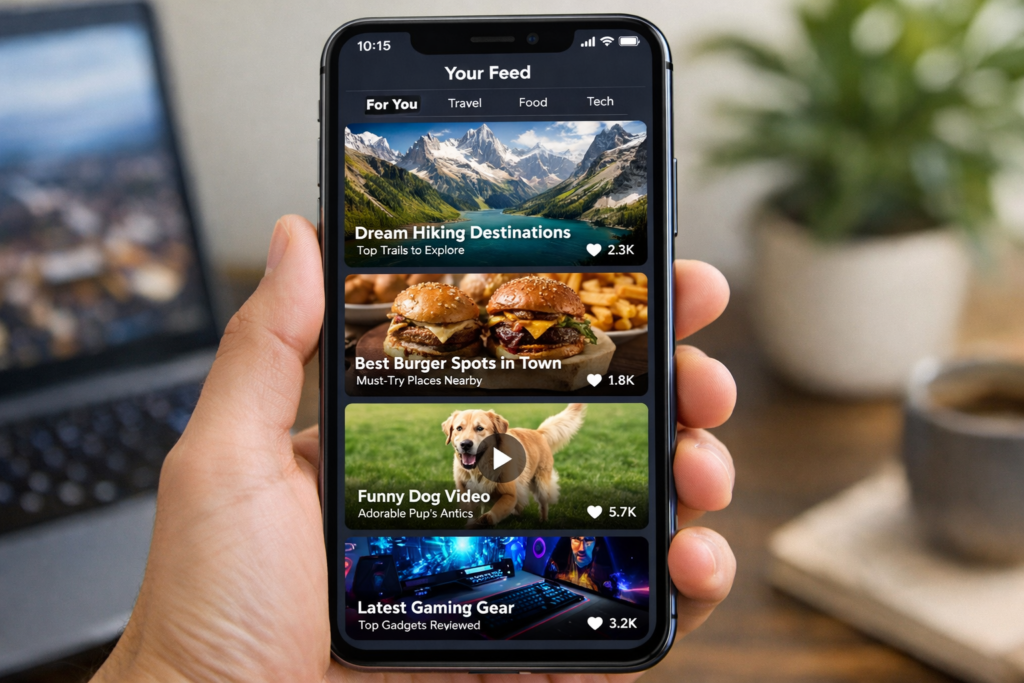
There is massive use of invisible AI on social media platforms to dictate what happens to be in your feed. Your likes, shares, comments and watch time are analyzed using algorithms to build you a personalized experience.
It implies that what you are reading is not in chronological or random order, rather it is carefully chosen to ensure that you are not bored. Although this is a way of enhancing the user experience, it may also lead to an echo chamber where you are only subjected to like minded ideas.
Online Shopping
Invisible AI is applied in e-commerce to improve customer shopping. All the recommendations of products, the suggestions in the category of customers also bought, and targeted advertisements work on the basis of AI.
There are also dynamic pricing algorithms that the company will be able to adjust the price of the product depending on the demand, user behavior and even location. This makes it possible that two users can be charged different prices on the same product at the same time.
Navigation and Transportation
Invisible AI is applied in navigation applications such as Google Maps which analyze the actual traffic and provide the best route. These systems take into account the variables, which include congestion, accidents and travel history.
Ride-sharing services are another example of AI usage to estimate the price, pair the driver with a customer, and use surge pricing in times of high demand.
Banking and Finance
Invisible AI is applied by financial institutions to detect frauds, credit score, and keep track of transactions. Algorithms monitor your spending behaviour to warn of abnormal behaviour and block fraud.
The AI systems have a tendency to assess your eligibility to borrow loans or to use credit cards based on financial information when you apply to take loans or use credit cards. Nonetheless, such decisions may not be transparent at times and the user can not know why they are approved or rejected.
Streaming and Entertainment
Streaming services employ the invisible AI that suggests films, television, and music. The recommendations are given on the basis of your viewing history, preferences as well as the level of engagement.
Although this will make it a personalized experience, it may also inhibit the exposure to various content with algorithms having the tendency to copy and paste the same patterns.
The mechanism of How Invisible AI works.
Data Collection
Unseen AI systems collect information on various platforms, such as applications, websites, and smart devices as well as online. It is this data that is used as a basis to make decisions.
Pattern Recognition
The analysis of the collected information is performed by machine learning models that define the trends and behavior patterns. As an illustration, they may get to know the nature of content that you consume most.
Decision-Making
Relying on such insights, AI systems are used to make predictions and choices, e.g. what ad to show, what route to recommend, or whether a transaction is suspicious.
Continuous Learning
The AI systems that cannot be seen keep on learning as they get new information. This is a continuous betterment that causes them to become more accurate and effective with time.
Advantages of the Invisible AI.
Personalization
Invisible AI is used to provide personalized experiences, based on the preferences of the user. The relevance is improved by AI either via curated playlists or personalized shopping recommendations.
Efficiency
Automated decisions cut down the time taken to carry out such activities as navigation, approvals, and content discovery.
Security
AI is very important to detect fraud and to secure the sensitive data.
Convenience
Invisible AI makes daily routine more comfortable by predicting the needs of the user, and the manual input may not be necessary in the majority of cases.
Risks and Concerns
Lack of Transparency
Most AI systems are black boxes, i.e. users are not aware of the method of making decisions. This may result in mistrust due to this lack of clarity.
Bias and Discrimination
In the event that the information that was used to train AI is biased, the system might deliver unjust results. This is especially worrying in such sectors as recruitment, borrowing, and policing.
Privacy Issues
The continuous process of data gathering causes the critical issues of personal information storage, sharing, and utilization.
Reduced Autonomy
In situations where AI takes the decisions on your behalf, it may constrain your personal choice, making you realize that in the long run you may be influenced by the AI decisions.
How to be Aware and to be In Control.
Adjust Privacy Settings
Periodically, update privacy settings in apps and sites to manage the data gathering and utilization of your data.
Limit Data Sharing
Do not post any personal information that is not essential and watch out with Apps.
Diversify Your Content
Actively engage in information seeking through other sources so as not to get stuck in algorithms-driven bubbles.
Take Caution of Recommendations.
You should understand that AI has an impact on suggestions, and these can not necessarily represent your preferences.
FAQs
1. What is visible AI?
Invisible AI is a term that is used to describe the background systems that operate based on data and algorithms to make decisions without having a person-to-person interaction.
2. Does invisible AI affect my decision-making?
It influences what you will view on the internet, recommend products, set prices and even influence financial approvals.
3. Does this mean that the invisible AI is always accurate?
No, AI systems are not error-free and it can be very difficult to train them based on biased or incomplete data.
4. Is it possible to control or to avoid invisible AI?
Although it is impossible to avoid it, you can minimize its effects by setting privacy options and sharing less data.
5. Why not be concerned about invisible AI?
Since it influences your decisions, possibilities and privacy in a manner that is not immediately observable.