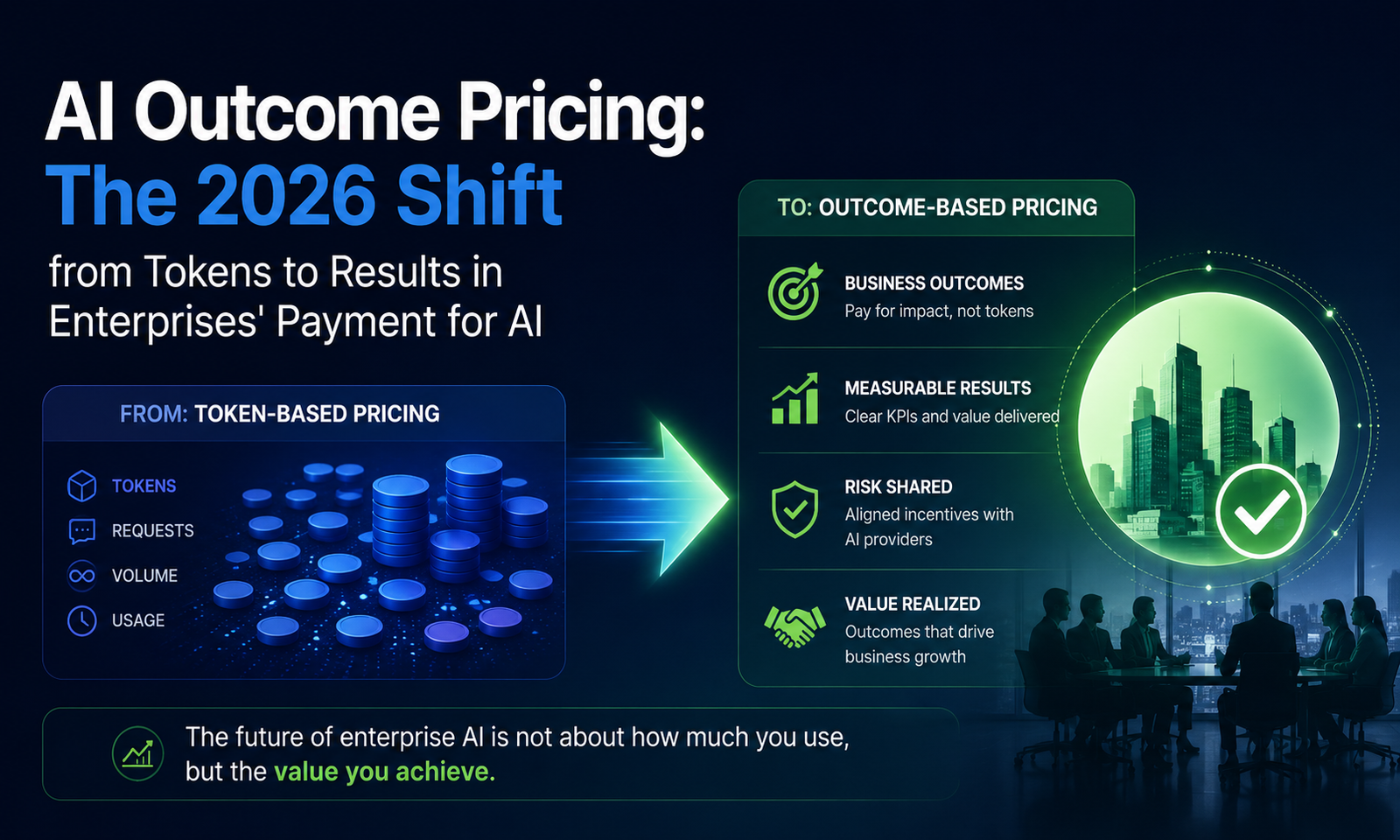
The era of AI as an experimental technology has come to an end and it’s become an integral part of business investment. The debate surrounding AI models’ size or the number of tokens expanded is being replaced with one originating from a different source: How is AI adding value to businesses? This question has led to the development of a new pricing model called AI Outcome Pricing, in which businesses only pay AI service providers when tangible outcomes of the business are achieved. Vendors are now offering their API services free of charge (or at least at reduced rates) for prompts, API calls or tokens, but instead, they have begun to tie their revenue with completed tasks and/or successful workflows and/or monetary impact. This change in business is redefining the way enterprises consider making investments in AI – it facilitates executives to directly associate the spend with ROI and incentivizes providers to perform better rather than just use it more.
Why Enterprises are Going Beyond Token Based Billing
It had been an effective pricing strategy in the early days of AI, when it was easy to track usage of compute resources. For enterprise buyers, however, that’s not always the case, since they’ve learned that usage doesn’t necessarily equal value. A business can trade millions of tokens each day and never make any progress on making the business more productive or more profitable. When AI usage is outpaced and starts to increase in an unprecedented way, finance teams face problems with the unpredictable monthly costs. Through the implementation of outcome pricing, organisations will begin to have more financial clarity, ROI calculations will be more straightforward and confidence in the knowledge that every payment is made to drive a measurable impact on business will increase.
The value to executives of Outcome Based AI Contracts.
- Investing in AI gets put into action and begins to impact directly on ROI.
- A more accurate forecast of the budget is completed throughout the financial year.
- No change in the responsibility of the vendors for performance instead of usage.
- Business leaders will be able to better compare businesses investments in AI.
- Predictable pricing makes it easier to adopt Enterprise.
How AI Outcome Pricing Works
Define success before deployment of AI.
All successful outcomes based contracts start with clearly-specified business objectives. Before implementation, there are measurable indicators agreed between the company and AI provider(s). These may be a reduction in customer response times, more sales opportunities, document processing speed and accuracy or a reduction in operational costs. The fact that both sides have clear measures of success from the start means that they will know when a deployment will be considered a success. This also ensures that there isn’t any conflict in the future as the performance is measured according to the agreed business goals and not technical figures.
AI is Performing Business Processes.
However, once the objectives are set, AI starts to be seamlessly utilized in everyday work. In today’s world, the traditional approach of answering questions and responses is replaced for the complete workflows by AI systems that can interact with enterprise software, databases, CRMs, communication platforms, and business applications. AI can qualify leads, make financial reports, sum up legal docs, keep an eye on supply chains, and assist workers in various departments. These workflows have measurable output and business can ensure if AI has successfully achieved what they have signed up for.
Performance Is Continuously Measured
Outcome pricing is the instance that uses business analytics, as opposed to counting the number of API requests as in traditional billing systems. Dashboards track workflows that are completed, customer satisfaction, operational efficiencies, revenue growth and cost savings. Detailed reports provide insights to decision makers on how AI is contributing to organisation’s objectives. Continuous measurement also enables providers to fine-tune their models as they seek to enhance the accuracy of their measurement, and sharpen their margins will boost their own revenue in the event of outcome-based agreements.
The payment is connected with certified results.
Once the business outcomes are validated, the payments are made based upon the business outcome pricing model agreed upon. There are several types of contracts, some of which are based on a cost function, and others on a number of completed tasks. This establishes a partnership that’s successful with the customer as well as the provider. Businesses can be assured that all payments are truly business value and not for system activity.
How to measure the success of AI in business using business KPIs
Revenue Growth
The way AI’s contribution is measured has become more prevalent – by the numbers related to revenue generation. Companies can use AI to assist them in closing more leads and creating intelligent marketing campaigns that resonate with prospects, as well as offer intelligent sales support. With revenues entering the equation, AI vendors are more concerned with providing solutions that enhance commercial outcomes, than on getting the platform used.
Operational Efficiency
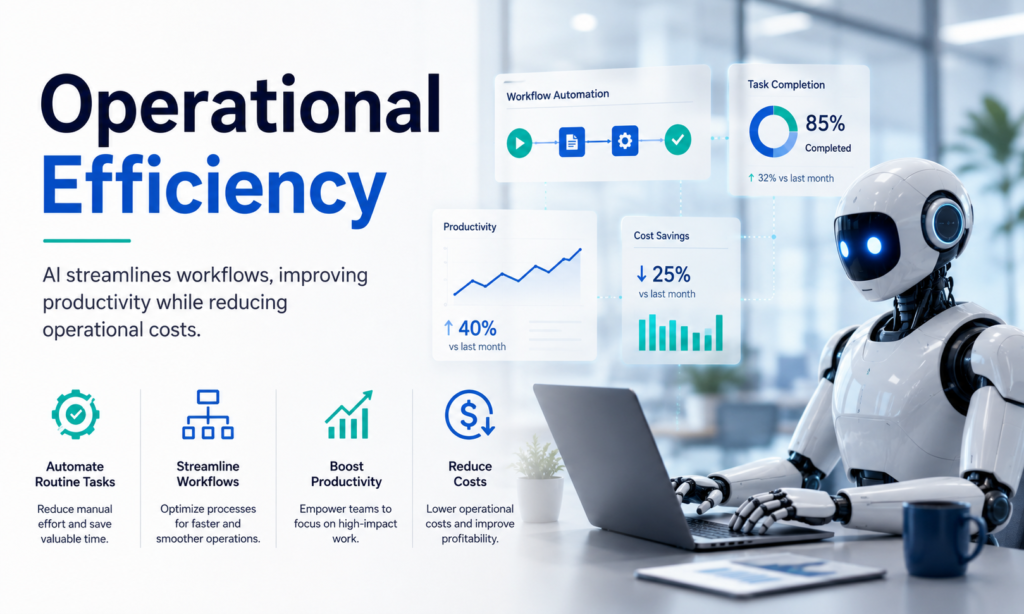
One of the best benefits of AI is that it can help to minimize repetitive tasks. AI’s impact on time efficiency is the automated nature of reporting, documentation, scheduling, customer interactions, and administrative tasks, which are monitored for their time-saving benefits to businesses. More efficient working increases efficiency and frees up staff to do more value-added work and delivers measurable productivity increases to help drive outcome-based pricing.
Customer Experience
One of the best indicators of customers’ satisfaction is still the Customers’ satisfaction. Support systems using AI can answer queries immediately, give personalized answers and minimize waiting time. AI’s impact on customer feedback, resolution rate and service quality is measured to see that AI is providing actual value that is worth paying for.
Decision Accuracy
It is essential that executives have accurate business intelligence. Businesses face reduced risk with AI that can accurately predict, analyze finances, make compliance suggestions, or create reports and more. Decision accuracy provides a measure of the reliability of the information AI provides instead of just churning out a lot of information.
Conclusion
AI Outcome Pricing is a major new development in enterprise AI as it shifts the focus from using AI to driving business results. But, rather than being a prompt, token, or API fee, companies now demand that companies invest in AI to provide tangible returns in terms of financial results, improved operation and customer satisfaction. This model fosters increased vendor accountability, and enhances business leaders’ confidence in their AI tactics. In 2026, AI is poised to be more than just a commercial trend; it’s quickly becoming the preferred approach for organizations to maximize the return of each AI investment and ensure that all those dollars invested in AI solutions result in tangible and measurable business success.
Frequently Asked Questions (FAQs):
Q1. What is AI Outcome Pricing?
AI Outcome Pricing is a business model that pays AI service providers based on the outcomes of the businesses’ use of the AI, rather than by the number of tokens used or API requests made.
Q2. What’s driving businesses to abandon token pricing?
The unpredictable nature of token pricing can be a challenge and lead to the difficulty of accurately attributing the value of AI systems to the business.
Q3. What industries can benefit the most from outcome pricing?
AI pricing is being used in several industries such as Sales, Healthcare, Finance, Manufacturing, Customer Support, Legal Services, HR, and more.
Q4. Can the new outcome pricing model take the place of the classic AI subscription model?
There are a number of experts who believe that the hybrid pricing models, where both payment of a subscription fee and outcome fees are paid when the business performs, will continue to grow.