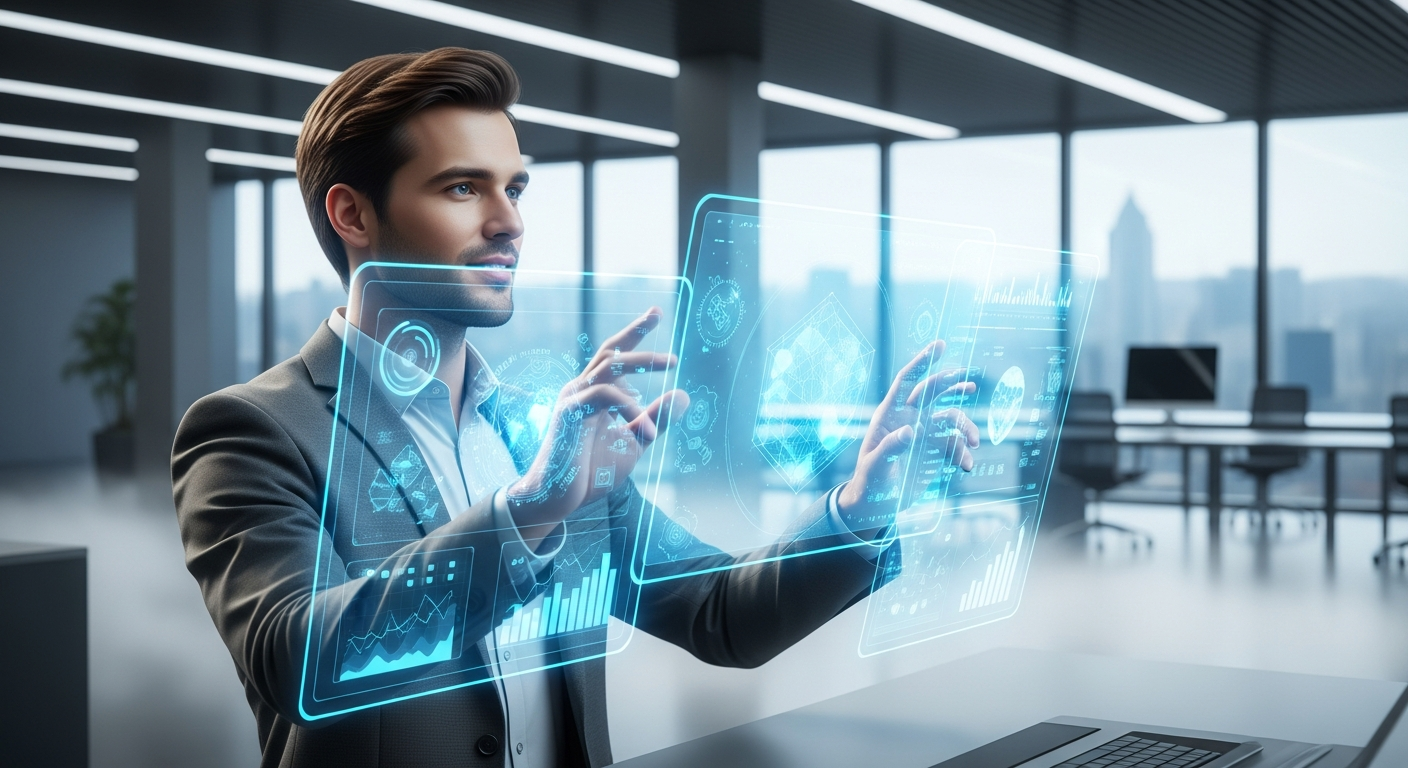
With the emergence of AI-generated digital humans, the world is changing the way we work, communicate, and entertain. These are not just computer-generated avatars but they are interactive, intelligent and realistic, they are able to replicate human appearance and speech as well as emotions. These digital personas are becoming more popular as companies, educators, and creators use them to bridge the gap between the physical and virtual worlds to provide new mechanisms of collaboration, training, and entertainment.
Intelligence about AI-generated digital humans.
Digital humans created by artificial intelligence are not just a 3D model, but a complex virtual person that is fueled by artificial intelligence. With the combination of deep learning, natural language processing (NLP), and computer vision, such avatars can be interacted with in real-time, changing their behavior and reactions depending on the context.
Fundamental Technology of Digital Humans.
To design believable digital humans many technologies are needed to collaborate together:
- Deep Learning Models: The neural networks examine large data sets of human expressions, gestures, and speech patterns and generate realistic behaviors.
- Motion Capture and Facial Animation: Motion capture is used to capture the movements of a human being and the artificial intelligence delivers fluid and natural animation.
- Natural Language Processing (NLP): NLP enables the ability of avatars to speak and respond conversationalistically in other languages.
- Generative AI: Generative adversarial networks (GANs) create any realistic body movement and facial features.
- Voice Synthesis: AI speech synthesis is a language system that uses tones, pitch, emotion, and contextual information to imitate human speech.
These factors make digital humans not merely appear lifelike, but they behave, talk and react to others as humans do and therefore can be used both in work and entertainment.
Virtual Workspaces Applications.
Digital humans, which are developed with the help of AI, are becoming part of the contemporary virtual workspaces. Companies are considering such avatars in order to enhance productivity, teamwork, and interaction.
Digital Assistants and Team-Work.
Digital humans are virtual assistants that are used during meetings, project management websites, and communication applications. They include interactive presence, schedule tracking, and queries, unlike traditional tools. AI avatars can also enhance the personality of meetings in a virtual room, making them enjoyable and realistic, so no one feels the same tiredness that can be caused by online meetings that last longer than necessary.
Training and Onboarding
Digital humans are used by the companies to train and onboard employees effectively. These avatars have the ability to show workflows, simulate, and provide real-time personalized feedback. The AI avatars unlike the traditional videos can adjust to the pace and the queries that the learner has, thereby producing interactive and dynamic learning.
Customer Service and Customer Interaction.
AI avatars are becoming more and more widely used as a customer service agent. They respond to inquiries on websites, chat rooms and virtual worlds, offering 24 hrs support. These avatars will be able to identify emotions and react empathetically to client satisfaction by analyzing tone, language as well as facial expressions.
Industry Revolution: in the Entertainment Industry.
The entertainment industry is another area that has rapidly embraced AI generated digital humans by developing novel types of media and experiences.
Virtual Performers and Influencers :
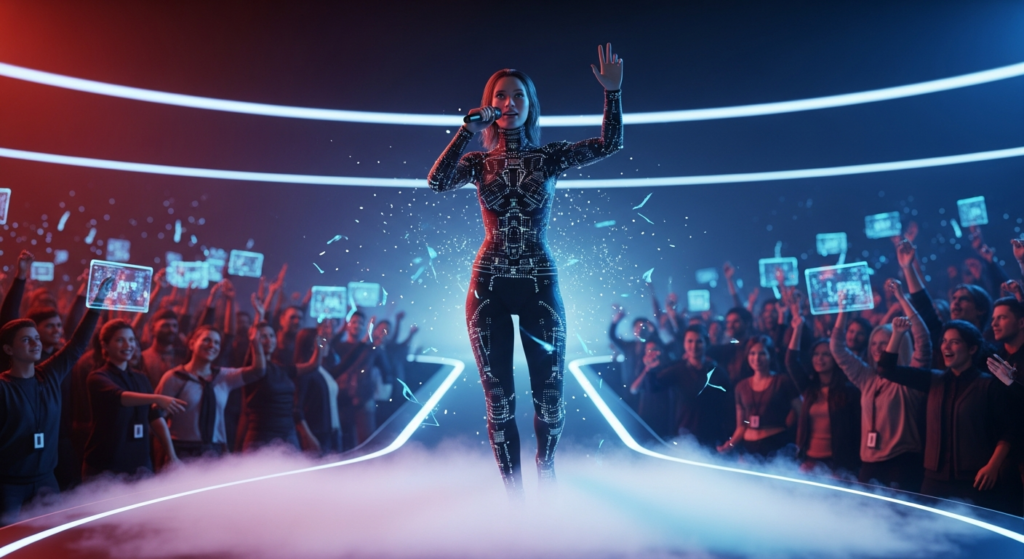
Virtual influencers and performers in the form of digital humans have now appeared. They are represented in social media, communicate with followers, hold live concerts, and take part in marketing campaigns. Through these avatars, brands use them to communicate to audiences without logistical restrictions and human constraints and therefore they are able to be available online at all times.
Interactive Media and Gaming.
The games are making AI-generated characters more responsive and intelligent. They can talk as real people do, respond to the actions of the players, and can have realistic emotional responses, which improves immersion. Likewise, VR and AR experiences also have the advantage of having avatars which can be realistically interacted with, enabling digital worlds to become alive and interactive.
Film and Animation
The digital doubles and animated characters in films are being performed by AI avatars more and more often. This helps to lower the cost of production and enables people to be creative because the avatars have the ability to do things that they would have felt unsafe or costly to have done by human actors such as stunts, dialogues, or even background interactions. These cyborg humans naturally enter the live-action shots to form hyper-realistic storytelling.
Technical and Ethical Concerns.
Although AI-generated digital humans are promising opportunities, it is important that there exist ethical and technical considerations.
Authenticity and Trust
An extreme use of digital humans in the media might create confusion between reality and simulation thus deceiving the audience. The credibility issue needs to be taken care of through transparency regarding the AI nature of avatars.
Privacy Concerns
Developing digital humans can be associated with extensive amounts of personal or biometric data. High data privacy measures are important to halt abuse or violations.
Bias and Representation
The models developed using AI will be trained using biased data sets. Creators need to make sure that there is diversity and provincial offensiveness, or inaccurateness in digital humans.
Technical Limitations
Although this has improved, real-time performance of high-fidelity avatars takes considerable computing resources and AI does not yet support unpredictable human behavior, improvisation, or contextual sensitivity.
Future Outlook
The future of the AI-generated digital humans suggests having fully interactive and hyper-realistic avatars implemented into everyday life. They will work harmoniously with humans in the workplaces and in the entertainment sector, they might serve as customized narrators, instructors, or companions. With the development of AI technology, digital humans will have roles to work, live, and be involved in decision-making, which will provide fresh opportunities to be creative and efficient.
Conclusion
Digital humans that are created with the help of AI are transforming virtual workspaces and entertainment, providing previously unmatched interactivity, realism, and efficiency. They improve teamwork, streamline training, increase customer interaction and provide immersive entertainment. Even though the issues of ethics, privacy, and technical constraints cannot be eliminated, the days when digital humans will coexist with real humans and digital humans will be richer in terms of the prospects of both professional and creative worlds are ahead.
FAQs
Q1: What sectors are the most useful digital humans created using AI?
Interactive AI avatars can be most useful in such industries as corporate training, customer care, entertainment, gaming, social media, and healthcare.
Q2: Do AI-created humans identify emotions?
Yes, high-grade AI is capable of speech, expressions and text analysis in order to react empathetically.
Q3: Are AI avatars costly to make?
Costs vary. Simple customer support avatars are cheap versus fidelity avatars of film or VR, which are expensive.
Q4: Will AI avatars take the place of actual employees or performers?
No. They do not substitute human roles as they are repetitive but are incapable of substituting human creativity, judgment, or intuition.
Q5: To what extent are AI generated digital humans realistic?
The current state of AI avatars is extremely realistic, yet there are still minor aspects of humanity and improvisational skills that are hard to imitate.