

The use of artificial intelligence (AI) is increasingly becoming more and more effective every year. AI systems these days can reason, code, and analyze information, use software tools, and accomplish complex tasks. That’s with the advent of AI from gleaning answers to performing actual actions; another constraint is becoming prominent: permission.
An AI agent could have a comprehensive understanding of the required actions but fail to take them if the agent has no permission. Providing it too much access would result in security concerns, and providing it too little access would result in less automation. However, there is a new challenge for businesses: how to create powerful AI systems that can operate without human supervision and effectively yet are well-trained to be trusted.
AI Can Understand the Task Without Having Authority
Most conventional AI technologies generate info that people go through and use. Agentic AI is an engine that enables systems to “talk” to applications, databases, APIs, financial or other platforms, and business processes.
This in turn brings up the critical question to navigate whether or not AI can do a task. It needs to also be decided whether or not a business should permit their agent to do it.
Five changes are likely to become increasingly important:
- Each AI is called an agent within a system and could have its own digital identity.
- Access might be restricted based on confidentiality to certain roles.
- Human action may be needed for actions that are considered to be high risk.
- As long as you need to use a temporary permit, it might let you minimize unnecessary exposure.
- Comprehensive records of audit activity might be needed in order to demonstrate AI activity.
Access is not guaranteed based on intelligence.
If the financial assistant is based on AI, it might recognize an invoice still pending, but its identification can’t be used to authorize funds to be transferred. Likewise, there may be a security bug that a coding agent can discover, but not modify, with production software.
It’s important that this distinction between intelligence and authority be kept. Too many AI systems have been given wide access because they can utilize a specific tool. Many AI systems are getting access to anything they can because they are able to use a certain tool. It should have only the permissions it needs—the ones that are of relevance to the role and responsibilities.
AI Agents May Need Individual Digital Identities
Typically, users have logins, roles, and permissions. Usually employees will have logins, roles, and access policies. Similar identity systems can be used to enable AI agents to function. Each agent of a company could have completely different permissions, such as an accounting agent, a customer service agent, and a software development agent.
Payments can be made by an accounting agent without their approval of the invoice(s). A customer-service agent could make a change in the support tickets without viewing information that is confidential to employees. It would be easier to track activity and who took an action if it were individual identities.
Temporary Permissions Could Reduce Risk
AI agents don’t necessarily have to have full permission to all of the systems that they use. If a cybersecurity agent is looking into a cyber incident, he could be given access to certain logs for a short time and lose access to them when the investigation is over.
This way, the exposure will be kept to a minimum. Restricted and temporary access can help mitigate the loss if an agent makes an error, acts in an unanticipated manner, or becomes compromised.
Permission could be a key component of AI infrastructure.
Permission management may evolve from its role as nothing more than a cybersecurity job to the core of the AI infrastructure thanks to the growing prevalence of autonomous AI. There will be systems that businesses need to make a determination as to who that agent might be, but at the same time what they want to do and how risky it might be.
These are 5 developments that may form the new permission layer:
- Context-aware systems might be able to assess actions prior to execution.
- It is possible for additional verification to be performed if it is a high-impact operation.
- An agent’s access to tasks could be given as needed.
- Automated logs may be able to make an audit of authorizations.
- Organizations may have a particular AI policy that entitles different AI agents to different beliefs.
Context Could Change the Permission Decision
A generalized, simple yes or no access management function is usually the traditional function of access control. There may be other agents that need a bit more flexibility when it comes to AI.
For instance, the AI purchasing agent is normally able to automatically order office supplies. The manager will be notified of an unusually high dollar purchase so she or he may approve it, but a small purchase may not need any action. It’s still the agent, but there’s now a risk involved in the action.
High-risk actions can be controlled by humans.
Although there is a great amount of interpretation to be done, it doesn’t necessarily mean taking humans out of the entire workflow. Risk assessment can be used to allocate activities for a business into levels.
An AI could develop a summary of the contract, and perhaps a lawyer could approve the contract. Likely would be a vulnerability in software and would be able to create a patch and would need permission before altering the production infrastructure.
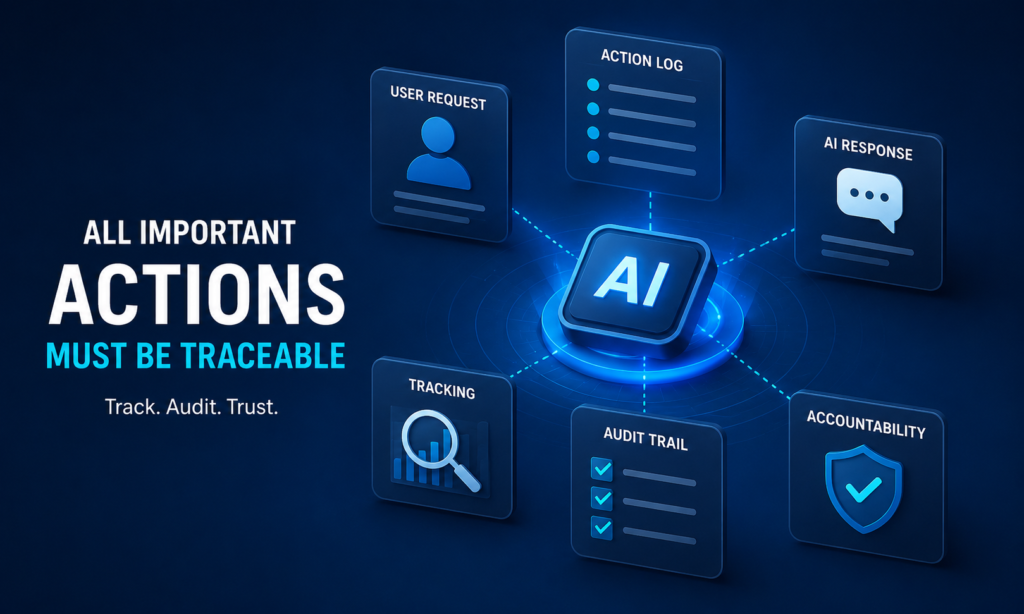
All important actions must be traceable.
If it’s a hundred or a thousand actions that autonomous agents have taken in a company, it’s important to know what is happening. They might require proof of action(s) that were taken, what it tried to do, what permission was used, and what the outcome was.
Thorough audits can facilitate investigations in case of failures, detection of anomalies, enhancement of the AI workflow, and proof that the automated systems adhered to the policies. In an agent-driven world, it’s as important as capability—it is accountability.
Smarter Models Will Not Be Enough for Autonomous AI
The focus of the AI race traditionally has been on intelligence, benchmarks, reasoning ability, speed, and accuracy. While these measurements will still be relevant, they might not be definitive.
It could be an extremely smart model, but if it can’t access the systems it needs for its tasks, position, and role information safely, it may not value the business as much as a less intelligent model that knows how to access systems safely with permission and has solid operational controls.
Conclusion
The biggest limitation in Artificial Intelligence (AI) could well turn out to not be intelligence. While AI systems are becoming more powerful, their effectiveness comes down to the extent to which organizations can trust AI to make decisions or perform actions. The effectiveness of these AI systems relies on the trustworthiness of organizations allowing AI to make decisions or act on them.
The specific permission, temporary authentication, human authentication, and reliable audit trails that businesses require have become even greater in the age of the AI agent, who has ventured into the finance, software development, customer support, security, purchasing, and operations arenas of the world.
FAQs
1. Why might permission be the next problem with AI?
From producing information to real actions: AI agents are evolving into more than just producers of information; they are also evolving toward the ability to actually take real actions. Authorization is crucial for those actions, as they involve access to business systems and sensitive resources.
2. Will AI agents need separate identities?
Businesses are more likely to allocate the individual agents different digital identities in order to allow granting permissions, tracking activity, and tracing actions.
3. Is there the possibility for a time limit on AI permissions?
Yes. Faced with an agent/employee needing to gain temporary entry into a system for a specific reason, temporary permissions can be granted only for a specific task, thus minimizing the extent to which they are exposed to important systems.
4. Do humans approve of the decisions taken by AI?
High-risk activities will probably continue to be undertaken by humans. Simple jobs can be automated, and critical operational, financial, and legal tasks and security decisions can be approved.