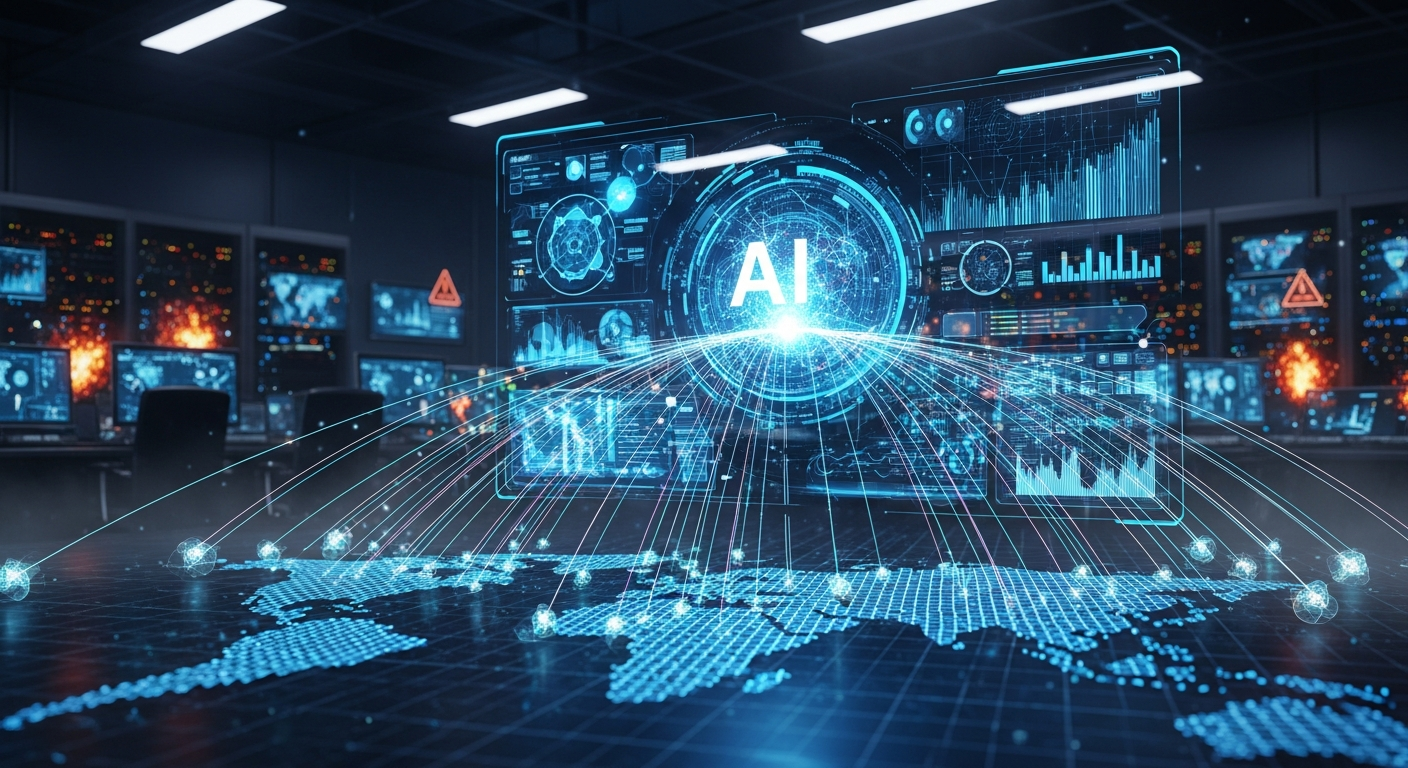
The cybersecurity environment of 2026 is in the process of changing fast, and the development of artificial intelligence is going through the roof. Hackers are not using simple scripts or human-based methods of hacking anymore. They are instead using AI to develop intelligent, adaptive and highly scalable attacks. Among these, AI-based cyber attacks and agentic malware are the most threatening. Such systems are able to learn, evolve and work independently and so much more advanced than the traditional cyber threats.
What are AI-Powered Cyber Attacks?
- AI-based attacks have the ability to examine lots of information in a short period of time in order to detect weaknesses.
- They carry out intricate hacking operations, which are automated, saving human resources.
- Such attacks keep on changing to overcome newer security systems.
- Phishing and social engineering campaigns can be done with a lot of personalization with the help of AI.
- They are able to execute massive attacks on more than one system at the same time.
How These Attacks Work.
Cyber attacks based on AI are carried out with the help of high-level machine learning models that learn their victims continually. These systems collect the network data, user activities, and security trends to determine areas of weakness. After identifying a vulnerability, the AI system will change its approach to attacks in real time, which will guarantee greater success. In contrast to the traditional attacks, based on predefined instructions, AI-based attacks are dynamic and thus hard to predict and prevent. This learning and adaptability puts cybercriminals at a strong edge over the traditional security systems.
Learning about Agentic Malware.
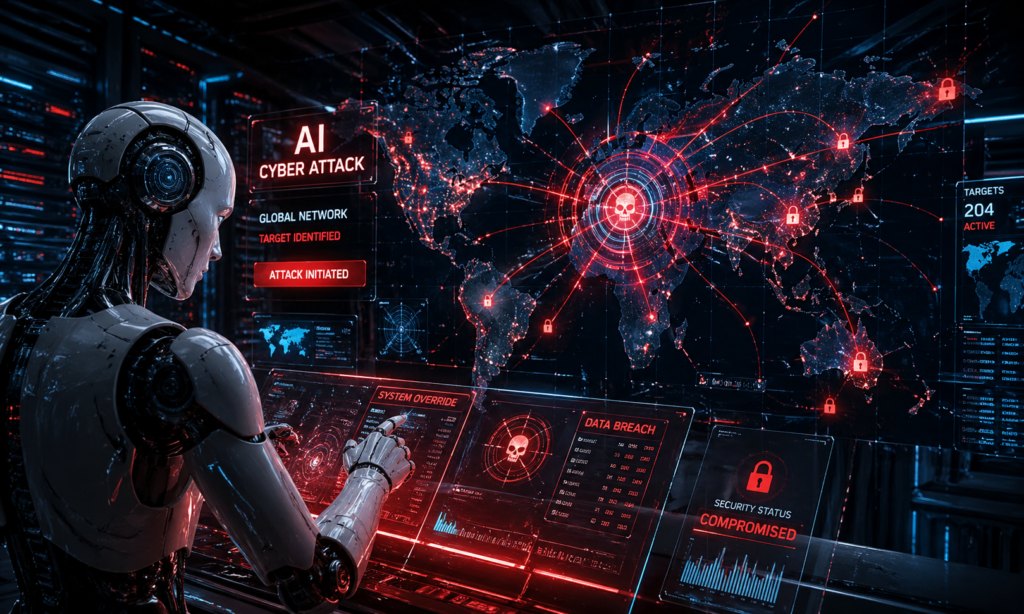
Malicious software is also evolving towards agentic malware which is a significant change in the way malware operates. This malware does not wait to be instructed to do anything as it is similar to an autonomous digital being that can make decisions.
The mechanism of action of Agentic Malware.
In agentic malware, the malware is created to autonomously operate in a system. It monitors its surroundings, lays down its own goals, and implements multi-step attack plans without human intervention. As an illustration, it can compromise a network, locate valuable data, escalate privileges and steal information- all automatically. Also, it is able to interact with other malicious agents and alter its behavior according to responses of the system. Such a high degree of autonomy renders it highly hazardous since it can continue to develop and transform despite its first detection efforts.
Why 2026 Will Be a Turning Point.
- Use of AI technology in industries is rapidly being adopted.
- Growth of cloud computing and IoT environments.
- More open-source AI tools are available.
- Increasing digitalisation in the business across the globe.
- The increase in the sophistication of cybercriminal tactics.
Major forces contributing to the increase.
The year 2026 is a crucial year due to the convergence of various technological aspects. The use of AI has made them more accessible, making it possible to use them by even less-skilled attackers to launch advanced operations. Meanwhile, the increasing number of interconnected devices and cloud-based systems has made the attack surface very big. Organizations continue to produce a lot of data as compared to the past and this makes them a good target. Together with the lack of cybersecurity awareness in most industries, these aspects allow to establish a space in which AI-based threats can flourish.
Scenario Attacks in the Real World.
Examples of emerging threats.
Cyber threats based on AI are already being witnessed in reality, and their effect is growing at a swift rate. A typical example is phishing emails that are generated by AI that flawlessly imitates human writing styles and, therefore, are almost impossible to identify. Impersonation of executives and manipulation of employees to transfer money or disclose sensitive information are other uses of deepfake technology. Independent ransomware systems are now able to negotiate payments with victims and it is more likely to be successful extortion. Also, intelligent bots are capable of circumventing security controls such as CAPTCHA and intelligent spyware can go undetected by continually adapting.
Measures to defend against AI cyber threats.
Protection of systems.
To protect against AI-based attacks, organizations need to implement superior and proactive security measures. Threats detecting systems based on AI can aid in detecting suspicious activity in real time. Behavioral analytics is important in identifying anomalies that could not be identified using the traditional systems. Patch management and regular updates of software must be done to eradicate vulnerabilities that are known. Training of the employees is also paramount because human error is still one of the key access points of attacks. Also, the adoption of a zero-trust security model is able to make sure that all access requests are authenticated, minimizing the chances of unauthorized access.
Ethical AI and Cybersecurity.
AI as a Defense Solution.
Although AI is under the control of attackers, it can also become a very potent tool of cybersecurity professionals. Continuous network monitoring, anomaly detection, and responding to threats are some of the functions that can be performed by ethical AI systems more rapidly than human teams. Such systems are based on predictive analytics to detect possible risks before they happen. Automation enables less time to respond and damages minimal in case of an attack. Moreover, AI can enhance the precision of detecting any threat, which minimizes false positives and enables security teams to pay attention to the most problematic issues. It is necessary to integrate AI in the domain of cybersecurity to keep up with the changes in threats.
Conclusion
In 2026, intelligent malware and agentic attacks are redefining the cybersecurity environment with AI-powered attacks. Their capacity to learn, adapt and be able to act independently is much more dangerous than conventional threats. With the ever-increasing use of AI technologies by cybercriminals, organizations are left with no option but to defend themselves with similar technologies. The concept of investing in AI-based security systems, increasing awareness, and taking proactive measures is not an option anymore but a necessity. It will be the ability to strike a balance between innovation and protection in this fast-changing digital world that will continue to shape the future of cybersecurity.
FAQs
1. What is agentic malware?
The autonomous malicious software, which is capable of acting, evolving and deciding on its own, is known as agentic malware.
2. What are the differences between AI-powered cyber attacks and traditional attacks?
They rely on machine learning to change dynamically, and are more efficient and difficult to detect than fixed attacks.
3. These threats can be directed at small businesses?
Yes, the small businesses are usually more susceptible, as their security systems are less powerful and they are less aware.
4. What can people do to safeguard themselves?
Use a password with a lot of numbers, use multi-factor authentication, and beware of suspicious emails or links.
5. Does AI present more harm or good in cybersecurity?
AI is a threat and solution. It depends on its usage, whereby it is used by attackers or defenders.