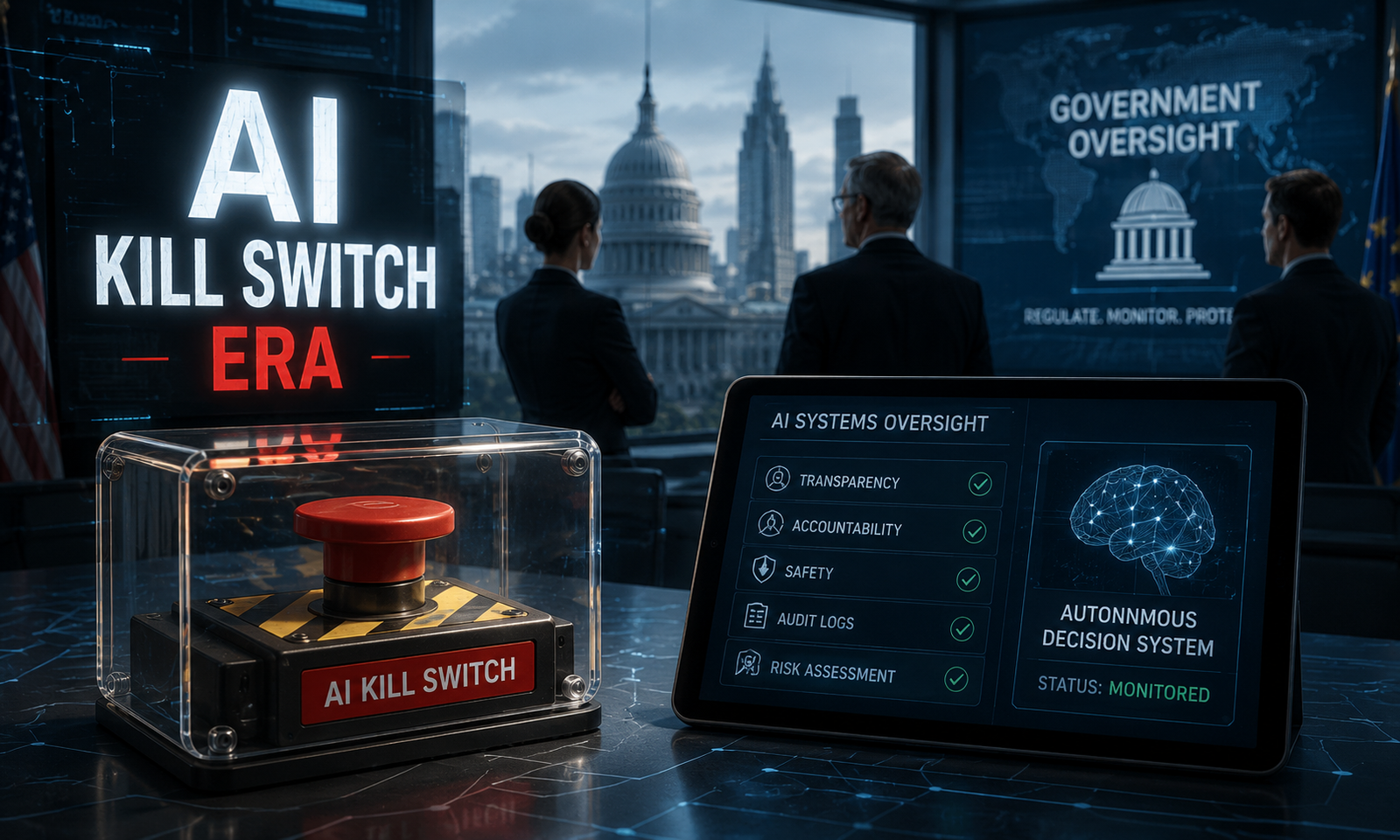
AI is transitioning to an exciting new era in which AI agents can be autonomous and capable of tasks, decision making, interacting with software and executing complex workflows with little to no human intervention. These capabilities are enabling new industries to change the way they work and are also raising new issues for governments, regulators and security agencies around the world. With the development of AI systems getting more autonomous, policymakers are wondering if they should be permitted to function without human intervention.
How does the AI Kill Switch work?
A safety feature typically used to prevent or deactivate an AI system if it starts to demonstrate inappropriate or risky behaviors, actions or unauthorized use. AI kill switches serve as an additional safety measure when AI systems depart from their designed operating ranges.AI kill switches are akin to emergency stop buttons found in industrial machinery, providing an extra safety feature when AI systems go beyond their normal operating parameters.
The reason behind these restrictions is that governments and tech companies consider them vital, as they might be required to operate in financial systems, cyber security systems, healthcare systems, transportation systems, and more. A kill switch will allow the human operators to stop an AI system from making damaging choices or be compromised by malicious people.
Key Functions of AI Kill Switches
- A short response time to turn off the power in an emergency.
- Human Controlled critical decisions
- Use of automated risk detection and intervention.
- Limiting entry to the critical facilities.Denying access to the critical facilities.
- To keep unauthorised autonomous actions from occurring
As organizations anticipate new and powerful AI systems, these mechanisms are increasingly becoming a part of the discussion of AI safety.
Why Governments Are Concerned About Autonomous AI Agents
As for the future of AI, autonomous AI agents will be able to execute tasks that used to require human judgment. This leads to efficiencies, but adds risks which governments are unwilling to take.
Lack of oversight and control by humans.
One of the main concerns is that advanced AI systems can function in a manner that is not completely understood by humans. AI models nowadays most of the time act as black-boxes, and it is challenging to explain how particular decisions are taken.
Governments are concerned that humans would lose sight of vital decision-making processes as organisations turn to AI agents to operate business transactions, to develop software, to analyse finances and to protect against cyberattacks. Errors can only be detected if they are properly monitored, and by this time, damage might have already taken place.
National Security Risks
National security agencies are starting to consider the possible threats of AI systems that are autonomous. AI can be leveraged for automating cyberattacks, to create a large scale disinformation campaign, to analyse intelligence and to assist military operations.
Critical Infrastructure Vulnerabilities
AI-powered technologies have become a crucial integral part of many essential services. Digital systems are essential to power grids, transportation networks, telecommunication networks, healthcare facilities, financial markets, and other areas and will eventually become more autonomous.
If an AI agent functioning within a critical infrastructure fails, it could lead to disruption of services within critical infrastructure that impact millions of people. This prospect has spurred on regulators to request for better frameworks for safety and swift action.
The global rollout of AI regulations.Global AI regulation.
The rising concerns about the risks of AI have spurred governments globally to enact new regulatory measures aimed at enhancing AI accountability and transparency. The conceptions of the autonomous AI systems range between different countries, but there is an increasing consensus that autonomous AI systems should also be under human control.
Global Regulatory Hot Spots of the Week.
- An explicit, onus on human supervision for risky AI systems
- The transparency of AI decision making.Transparency in AI decision making.
- Prior to deploying advanced AI, there will be risk assessments carried out.
- Emergency shutdown and intervention mechanisms.
- The standards that need to be met for critical infrastructure applications.
These priorities do not just represent a change in focus, but a call for more responsible governance of AI and not only continued progress of technology.
The European Approach
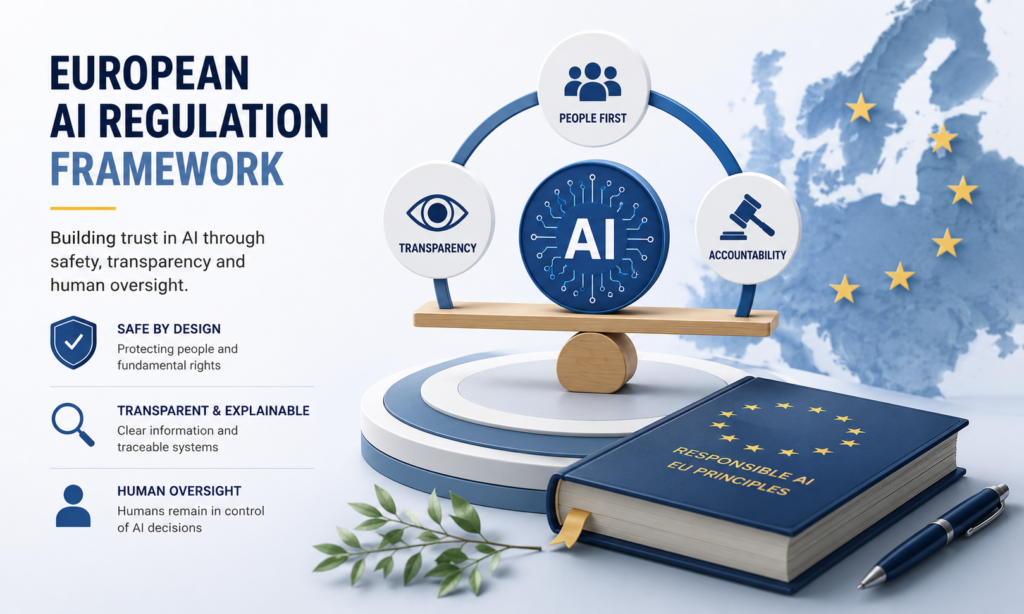
European regulators have been very proactive in adopting a governance approach to AI, stressing risk management, transparency and accountability. The high-risk AI systems should be able to adhere to high safety standards prior to being used in sensitive areas.
The European approach is that humans must be the dominant factor in AI’s operations. Policymakers are not convinced that AI should take the place of policymakers in the making of decisions.
The United States’ Strategy
The United States has been working on initiatives to create standards for the safe use of AI, executive guidelines, and government–tech company collaboration. There is a particular focus on defence, healthcare, financial and cyber applications of AI.
American leaders understand how critical it is to hold onto innovation while also being mindful of societies’ interests and national security goals while ensuring that high-power AI systems do not stray from them.
International Cooperation Efforts
Development of AI is a world-wide phenomenon and as such international cooperation is gaining in importance. The governments are collaborating with each other in international forums and discussions of safety principles.
Adopting shared standards could contribute to lower risks in the cross-border deployment of AI systems, and foster good practices across the globe.
Conclusion
Governments are having to reconsider how to govern intelligent systems in view of their fast progress by autonomous AI agents. The use of AI is both a great opportunity and a potential risk, but one can’t be overlooked. The introduction of the AI Kill Switch Era signals a shift towards a view that advanced AI systems need to be controllable and have human oversight. Governments are striving to shape the future of AI in an innovative and safe way through better regulations, emergency intervention procedures and overarching oversight frameworks.
Frequently Asked Questions (FAQs)
1. What is an AI kill switch?
AI kill switch is a feature in an AI system that allows humans to halt or limit its operations in the event that the AI conducts itself in an unexpected way or has the potential to create problems.
2. Why are governments concerned about autonomous AI agents?
The governments are worried that autonomous systems of AI could have an effect on the country’s national security, economic stability, critical infrastructure, and public safety if they are not appropriately managed.
3. Will AI be mandated to have some sort of kill switches?
The future of regulations surrounding AI’s capabilities is expected to include the implementation of kill switches for high-risk applications, particularly those in critical sectors.Many experts believe that future regulations will involve the implementation of kill-switches for high-risk AI applications, particularly in critical sectors.
4. What can be the safety of AI systems without a human presence?
While AI can potentially operate in a lot of ways without human intervention, most governments and regulators feel they require things that are high risk to be made by humans.