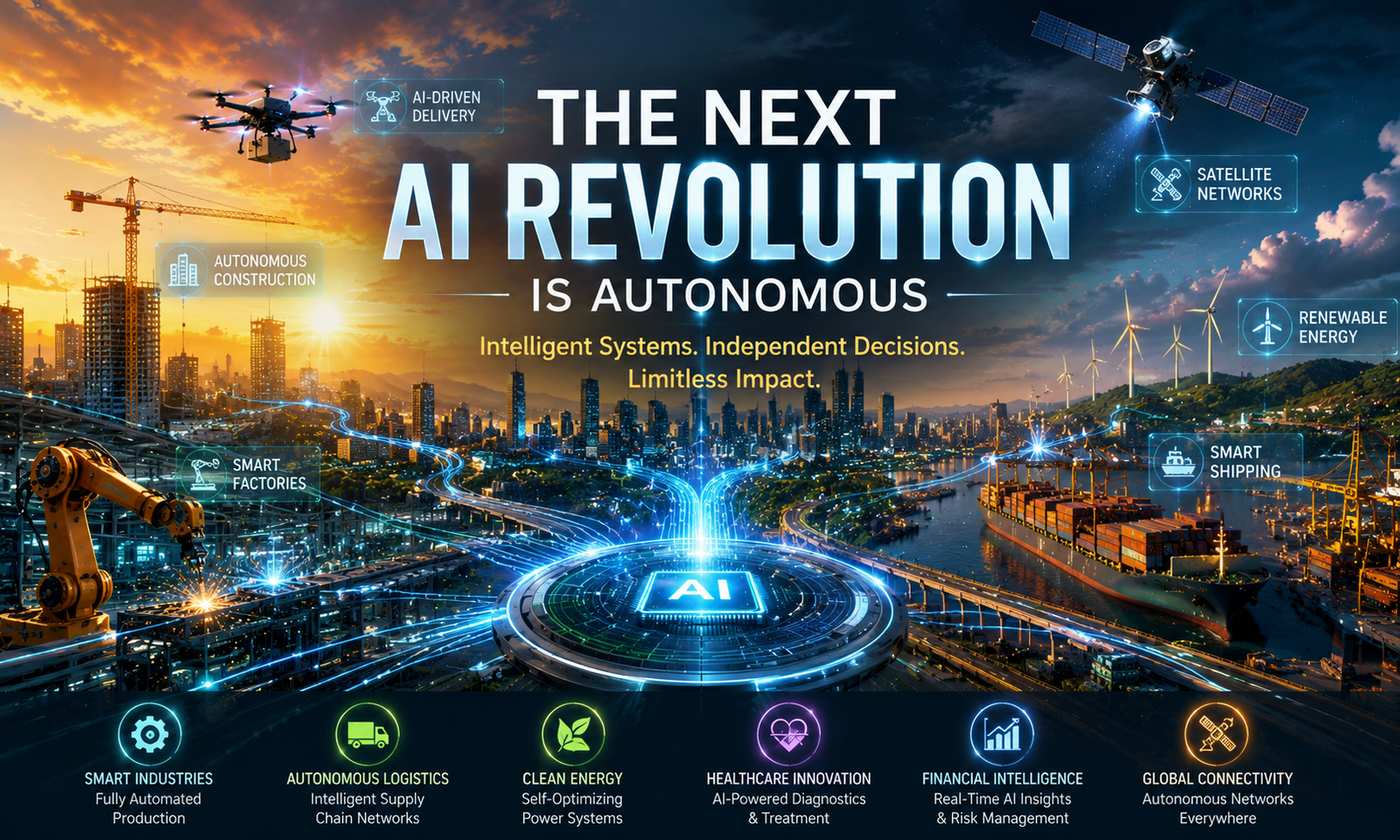
AI is quickly transcending prompt-based applications to become an intelligent system that can plan, analyze, co-create and take action. Rather than needing constant human supervision, next generation AI will be able to comprehend goals, make decisions and of course adjust to new situations in real-time. This change is anticipated to change the way business operates, how governments provide services and how industries are going to innovate. Autonomous AI will be a digital workforce that can take care of complex workflows, thus enabling humans to concentrate on strategy, creativity and leadership.
The Foundation of Autonomous Intelligent Systems
Main technologies used in the revolution.
- AI Agents
- Long-Term Memory
- Multi-Agent Collaboration
- Advanced Reasoning Models
- Real-Time Data Integration
AI Agents become Independent Digital Workers.
Instead of having to prompt multiple times to get a task done, AI agents are becoming intelligent assistants that can do the entire work. They are able to relate to goals, develop action plans, execute activities, track progress and make modifications to their plans depending on the situation. Currently, AI agents are being experimented with by businesses to automate customer service, research, software development and business processes.
Persistent Memory: Improves every decision.
Modern autonomous AI systems are able to keep a memory of past interactions unlike traditional AI systems, which forget once they’re done. It maintains the organizational knowledge, past decisions, preferences of users and the history of workflow. This enables AI to offer more individualised recommendations, and continually enhance its performance without having to begin again.
AI Systems work collaboratively.
Rather than a single AI model, companies are using groups of AI agents that are specialized in different tasks.Rather than using a single AI model, companies are now using groups of AI agents that are specialized in different tasks. One system is used for research, another for quality checking, another for reports and another for reviewing quality. Together this intelligence increases the accuracy, minimizes errors and helps organizations to automate more complex projects efficiently.
Advanced Reasoning Leads to Better Problem Solvers
AI can use the modern reasoning model to consider many solutions, and pick one that best fits the needs. These systems risk analysing, comparing alternatives and face unforeseen situations, instead of just forecasting text. This ability is ideal for industries that need a lot of planning, as well as decision making.
AI is continuously up-to-date with Real-Time Data.
Autonomous AI seamlessly integrates with enterprise software, databases, cloud systems, IoT devices and APIs. Real-time information provides intelligent systems with instant feedback to the changing conditions of business, and helps to make them faster, more accurate and more responsive.
Industries that are getting ready for the next revolution in Artificial Intelligence!
Major Areas of Transformation
- Healthcare
- Manufacturing
- Financial Services
- Digital Commerce
- Enterprise Operations
Healthcare enters the Age of Continuous Intelligence
AI is being increasingly implemented in hospitals to track patient movements 24/7, analyze patient medical images to detect signs of illness and help doctors plan patient care. Autonomous monitoring can provide a more early diagnosis of medical conditions, enhance patient results and decrease administrative workload for healthcare providers.
Smart Manufacturing Transitions to Self-Optimizing
The shift to reliance on robotics, predictive maintenance, computer vision and autonomous scheduling in the factories is taking place in increasing numbers. Intelligent systems monitor the performance of the equipment, predict the failure of any equipment before it happens, optimise production schedules and automatically improve equipment efficiency with very little human involvement.
Financial Institutions are embracing Intelligent Automation.
Autonomous AI is being employed by banks and financial institutions to identify fraud, assess loan applications, analyze investment portfolios, create compliance reports, and analyse the market. Continuous monitoring helps to make faster decisions, minimize the financial risks and enhance customer experience.
Digital Commerce is now AI-Driven.Digital Commerce turns to AI powered.
AI is being used autonomously in various sectors of retail, such as inventory predictions, customization, pricing, logistics, and customer service. Shopping behavior and market trends are constantly analysed by intelligent systems which enable businesses to react as soon as customers’ demand.
Enterprise Operation Moves to Autonomous Workflows.
In every sector, AI is streamlining repetitive business operations like document handling, inner reporting, scheduling, computer security surveillance, procurement, and task synchronizing. This frees up time for employees to be invested in innovation, strategic planning and in making decisions that will have a value.
Trust and engagement between human and autonomous artificial systems.
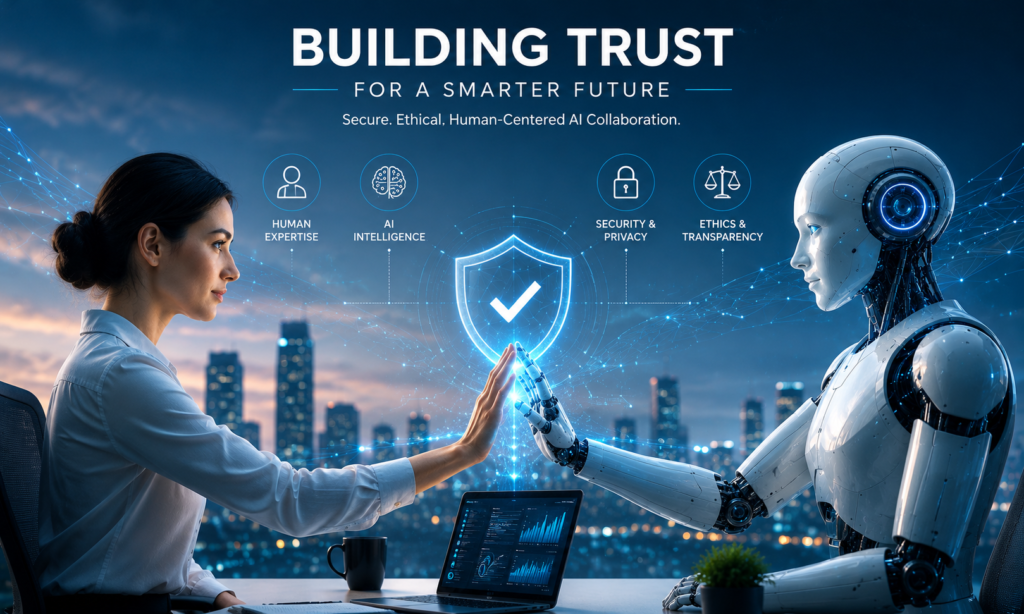
Organizations can’t afford to ignore the trust element when it comes to autonomous AI decision making and workflow completion, as the power of AI to take autonomous decisions and complete workflows is e
ver growing. For users to embrace intelligent systems, they need to be convinced of how decisions are determined, how data is being secured and how there is accountability. Companies are focusing on AI governance, explainable AI, cybersecurity, and regulatory compliance to guarantee the responsible behavior of autonomous systems.AI governance, explainable AI, cybersecurity, and regulatory compliance are areas that businesses are investing in, ensuring that autonomous systems behave in responsible ways.
Even with the rise in independence of AI, human oversight will continue to be crucial. Leaders will set targets, ensure they are being met, will scrutinise key decisions and will ensure all standards are being upheld in an ethical manner. The future of AI’s autonomous intelligence relies on technological progress and also on factors like clearness, security, and liable implementation.
Conclusion
The next global AI revolution will be marked by smart systems that do not need to be continually directed and instructed by humans. These independent technologies will radically change the way healthcare, finance, manufacturing, retail and enterprise functions, making them more productive, more cost effective and quicker to make decisions on. Companies with an independent artificial intelligence system and robust management, cybersecurity and man-in-the-loop controls will be best equipped to drive the next wave of digital innovation. Intelligent systems will not replace any human beings, but rather will be trusted partners that extend the capabilities of human beings and will impact the global economy.
Frequently Asked Questions
1. What are autonomous intelligent systems?
Autonomous intelligent systems are technologies that are powered by artificial intelligence, which are capable of planning things, taking decisions and performing tasks without human guidance.
2. What are the industries which will be most benefited by autonomous AI?
Autonomous AI is poised to bring transformational changes to industries such as healthcare, manufacturing, finance, retail, logs, education, and even to the operations of enterprises.
3. Will self-governing intelligence take over man’s jobs?
While repetitive jobs will be automated by Autonomous AI, human skills and expertise will still be needed to lead, create, act ethically, strategize, and make complex decisions.
4. Why is it essential to have AI governance?
AI governance guarantees the autonomy of AI systems, ensuring transparency, security, ethics and adherence to industry standards and regulations, while reducing operation risks.
5. What differentiates this next revolution of AI?
The next big wave in AI revolves around the intelligent systems that can operate without any human intervention, communicate with other AI agents, continuously learn, and accomplish tasks without human intervention.