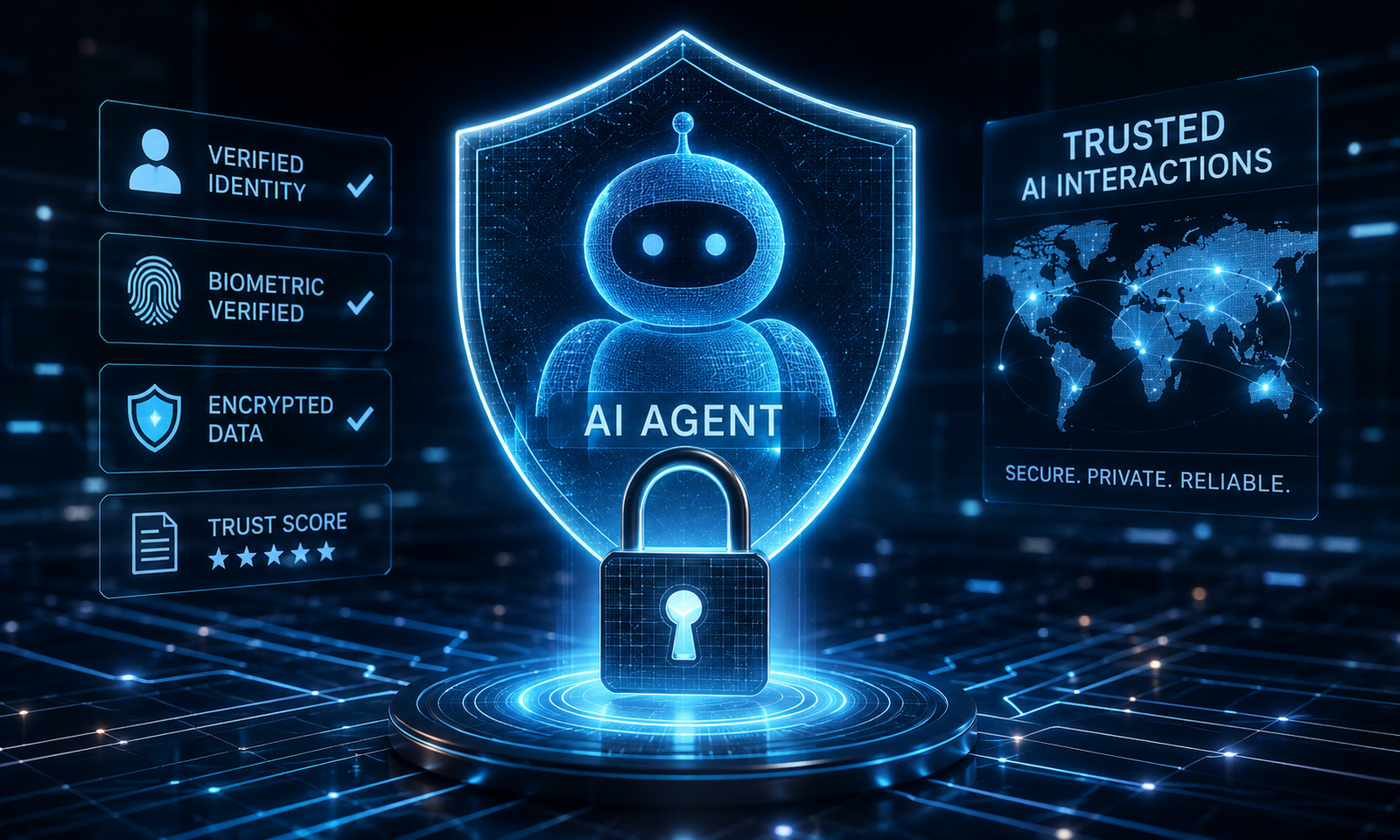
AI is quickly making its transition from basic chatbots to intelligent AI agents making decisions, performing tasks, interacting with software and even conversing with other AI systems. One vital component in trusted automation is becoming a key part of the transformation—Agent Identity.
It’s not just between humans and search that the next billion interactions with AI will take place. These will be happening across different components of an AI landscape, such as between AI agents, business platforms, cloud applications, APIs, and digital services. Each of these interactions needs to be verified by an AI agent who will have to establish his or her identity, level of authority, the organization he or she belongs to, and if he or she can be trusted.
The Invisible Identity Layer that fuels Autonomous AI Ecosystems.
As AI agents are increasingly used in various sectors such as customer interactions, cybersecurity, financial services, healthcare, software development, and eCommerce, it is important that all actions taken by an AI can be tracked and validated. Managing millions of autonomous AI agents, which run constantly, efficiently is impossible with traditional authentication used by humans.
Agent identity frameworks are unique digital identities given to each AI agent that enable the systems to establish identities, permissions, who owns it, and who is responsible for it, before allowing it.
Key capabilities provided by agent identity include:
- Ensure secure authentication of AI agents with Enterprise systems.
- Access to sensitive applications and databases that are based on a permission.
- Automated identification and verification of the ownership and authenticity of AI.
- Full compliance with regulations and regulatory standards.
- Real-time tracking and identification of unauthorized use of AI.
AI Agent Verifiable Digital Passport.
We are used to log in to the company resources using usernames, passwords, badges and biometric authentication. To facilitate machine-to-machine communications, there needs to be an AI agent identity model, too.
Digital identity for an AI agent consists of cryptographic keys, digital certificates, unique credentials, organizational identity, behavior policies and permissions. As an AI accesses cloud applications, accesses confidential information or runs business workflows, its identity is checked prior to granting access.
This identity-first approach not only avoids the unauthorized use of the anonymous AI systems but also makes it possible for agents to work seamlessly on various platforms.
Accountability for identity throughout AI decision chains.
In today’s AI world, it’s not often that a single AI system is used for a single purpose. Rather, many times one AI agent may have multiple specialized agents that focus on the tasks of research, scheduling, coding, financial analysis, customer communication or data processing.
A growing series of automatic decisions are established by each delegation. If identities aren’t verified, the actions taken and whether there’s a follow-up action to approved policies cannot be determined.
With agent identity, all actions are recorded, and AI operations are transparent, visible and traceable in case of any unexpected actions.
Trust Opens the Door to AI Co-Creation
In the future, there will be thousands of independent AI agents representing those in the business, customers, financial institutions, healthcare, etc., and government services.
To share sensitive information or to perform sensitive tasks, the AI systems need to build trust between each other, with verified identities. With trusted identity verification, only trusted AI agents can enter enterprise environments, helping to ensure safe collaboration and prevent malicious and cloned AI agents.
Designing Secure AI Economies by Verified Agent Identity
Agent identity is not just a cybersecurity component, but it’s becoming a key piece of the AI economy infrastructure around the world. Today, AI, operating on its own, is being used in negotiations, payments, supply chain, software deployment and customer experience coordination, among other areas, to help businesses.
If there is no trusted identity management, it means that organizations put themselves at risk of being impersonated, automated without authorization and at a large scale.
The era of identity being embedded in applications is thus coming to an end and the next generation of AI platforms are embedding identity directly into autonomous workflows.
Key elements of secure AI identity infrastructure are:
- AI Agent credentials are accessible, secure, and not easily be able to be replicated.
- Permission Management – Based on Roles.
- Autonomous tasks that run for a long period of time, and need to be continuously verified.
- Single Sign On (SSO) with multiple organizations and multiple cloud providers.
- Get full coverage of governance and compliance reporting of enterprise AI.
Even Artificial Intelligence Needs Identities Before Automation.
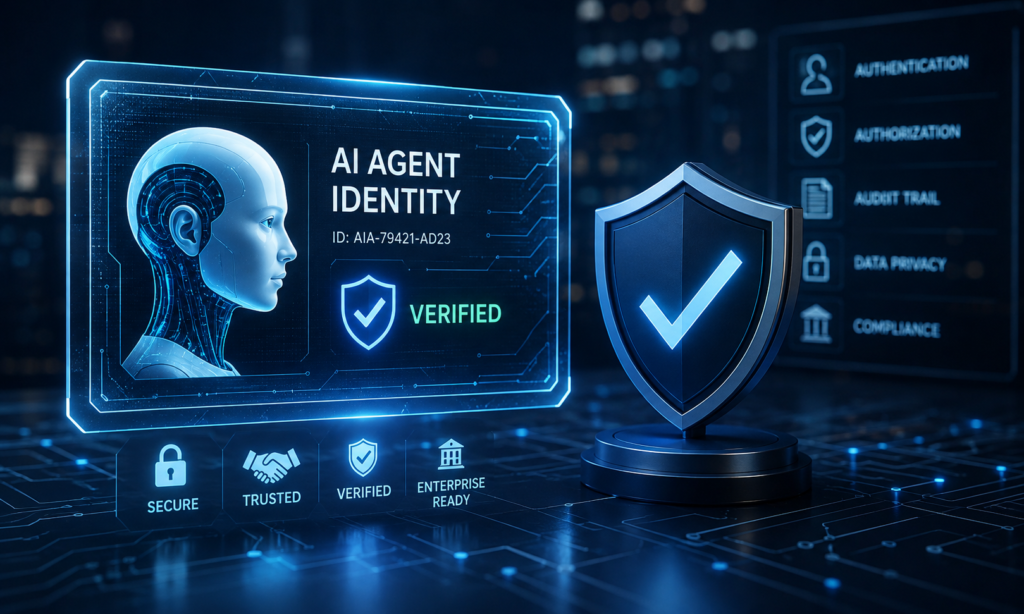
While various organisations are trying to deploy AI assistants rapidly, they are not putting in efforts to implement identity governance. With the introduction of AI systems into the financial ecosystem, many records, customer information, internal documents, and cloud resources will be accessible, making identity the first line of defence.
Only an authenticated AI agent can be given access as per its role assigned. Marketing agents are unable to change payroll systems, finance agents can’t access engineering repositories without permission and customer service agents can’t get confidential executive information.
AI-to-AI Communication Depends on Trusted Authentication
New protocols for AI autonomous communication allow agents to communicate with each other without the involvement of man. To receive instructions, share datasets or run collaborative workflows, receiving AI agents will need to verify the identity of the sender.
Global AI Regulations Will Require Identity Governance.
There is greater scrutiny and focus on transparency, accountability and the responsible use of AI by governments and regulators.Governments and regulators are paying more and more attention to transparency and accountability, and to responsible deployment of artificial intelligence. All future compliance requirements are likely to mandate that the organisations identify the actions of which the AI systems have engaged in and keep records of the operations.
Conclusion
Chatbots are not the only next steps in AI; the next is for agents to be more intelligent, autonomous agents that can handle true business processes. Trust will be the great need in the AI era, as billions of interactions happen every day with companies, in the cloud, in the financial sector, in the healthcare industry and digital marketplace.
Agent identity gives this trust, by creating a verifiable, secure and accountable digital identity for each artificial intelligence (AI) system. It allows for collaboration without compromising the security of sensitive data, enhances governance and fosters trust in AI automation on a massive scale. Today’s investments in agent identity are today’s investments in a secure tomorrow – in the intelligent digital economy.
FAQs
1. What is Agent Identity in artificial intelligence?
Agent Identity is a secure digital identity that is assigned to an AI agent that verifies its authenticity, permissions, ownership and access rights when the AI agent operates autonomously.
2. Why is Agent Identity important for enterprise AI?
It provides for access to only authorised resources for AI systems, ensures that they are not subject to impersonation attacks, enhances accountability of AI systems and allows for secure AI automation within enterprise environments.
3. What role does Agent identity play in AI security?
Through pre-authentication of each and every AI agent before they can access, close tailoring of permissions in real time and ongoing logging of permissions.
4. Which industries will benefit most from Agent Identity?
Secure AI identities will be crucial for industry sectors such as healthcare, banking, cybersecurity, software development, eCommerce, manufacturing and logistics, as well as government services.
5. Will Agent Identity eventually become an integral part of all AI platforms?
Yes. With the increased autonomy of AI in its use, we can likely expect identity management to be a key aspect of the secure, compliant, and trustworthy AI ecosystem.