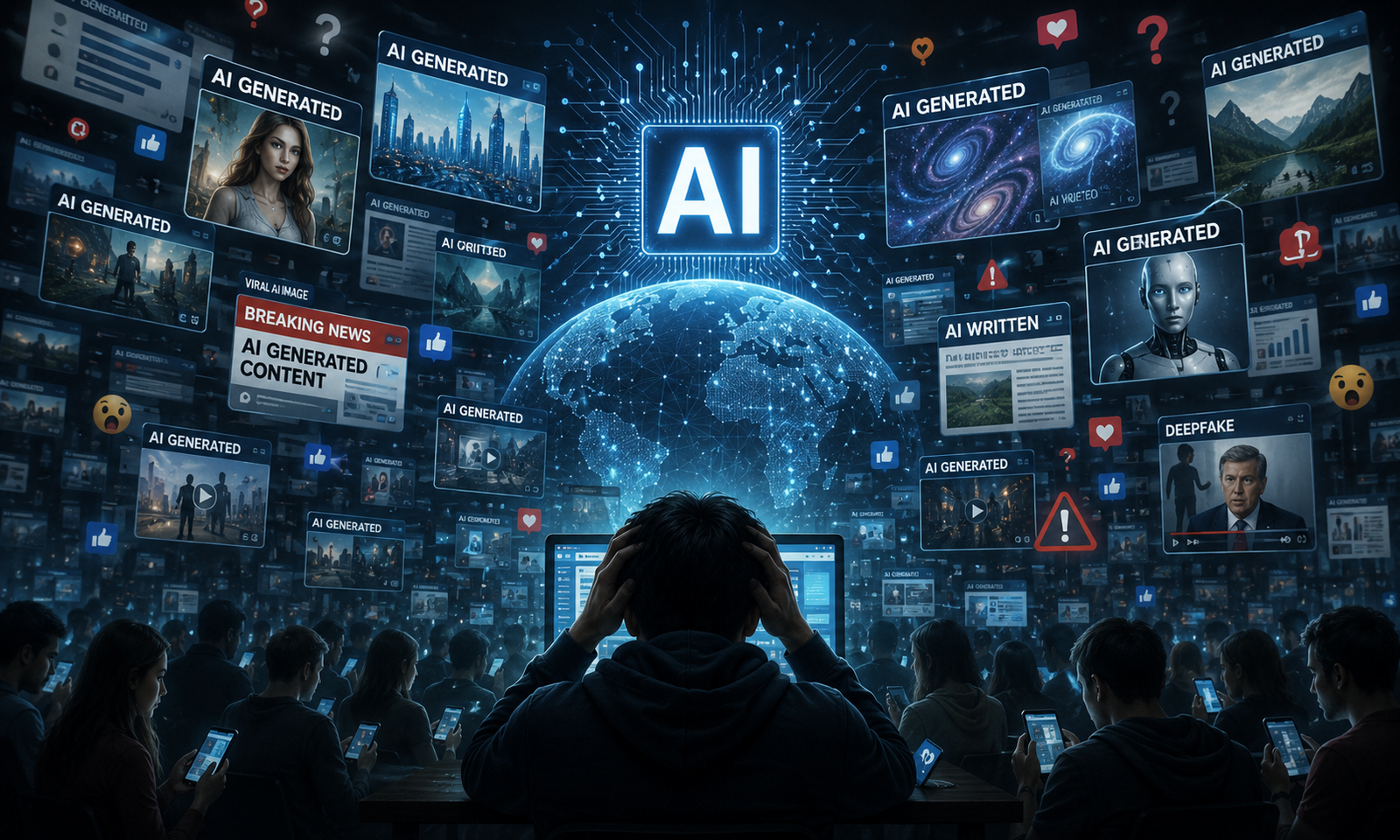
Artificial intelligence is transforming the way we see content creation online. In all aspects from blog articles and product descriptions to social media posts and news summaries AI powered tools are now producing content at an unprecedented scale. Businesses, marketers and publishers are adopting AI for what it does which is to reduce costs, increase productivity and speed up content publication. But with this tech shift comes what we are terming the Synthetic Content Crisis.
The concern is simple but significant: What is to become of a world wide web in which human contribution is the minority? As we see AI generated content take over search results and front pages of news sites, we put into play issues of originality, trust, quality, and accuracy. Although AI brings much to the table, a web which is a product mainly of machine generation may present large scale issues for its users, the creators of that which is put out, and the digital environment at large.
Understanding the Synthetic Content Crisis
The Issue of Synthetic Content sees the rise of passoff of AI created text, images, and videos which dominate the internet. What we are seeing is that AI models use what they are given on the internet to train off of which in turn they rehash and re present instead of coming up with true original content.
As more organizations turn to AI to post content at scale, what we see is a risk that the Internet will become a noisy place with lots of duplicate articles, repeating ideas, that which is passed off as original. This also puts at issue what users find when they are looking for reliable info and which creators put out unique, original material.
Key issues that fuel AI Content’s growth.
- Speedier content creation compared to traditional writing.
- Reduced costs for businesses and publishers.
- Instantly produce large amounts of content.
- Growth in online info and marketing.
- Continuous development of AI writing quality and accuracy.
AI’s Role in Transforming the Web.
The world is seeing a great growth in what is put onto the internet. AI tools are able to produce hundreds of articles in the time it would take a human writer to produce one. While this improves efficiency what it also does is to increase the amount of repeat content which appears across many sites. Search engines and readers are reporting that they see articles which have very similar structures, word for word in some cases and the same info sources. Over time this trend may make it harder to find unique points of view and expert analysis online.
The Feedback Loop Problem
Another issue is the AI feedback loop. We see that as time goes on AI will put out more info which was at first put out by other AI. If we do not address this we see that inaccuracy, bias, and repetition will grow in extent. In turn we may see a decrease over time in the diversity of content and the quality of info available.
The Risks of a Synthetic Internet
As we see an increase in AI generated content the internet is presenting a set of serious issues which in turn affect how people access info, trust online sources, and find what is valuable to them. Also we see that although AI improves efficiency in many ways, large scale use of automated content may in fact create long term issues for users, businesses, and search engines.
Key Risks Include
- From the flood of AI generated content.
- Reduced originality across websites and blogs.
- Widespread of false and misrepresentative info.
- Difficulty identifying trustworthy sources online.
- Declining visibility for expert human-created content.
Information Pollution and Content Saturation
In the age of the Synthetic Content Crisis we see the issue of information pollution. AI tools are producing thousands of articles in a matter of minutes which in turn see that sites are able to publish at a scale which is unprecedented. Although this increases the total amount of info out there it does not necessarily see an increase in quality. Also what we are seeing is that many AI generated articles are from the same data sets which in turn produces very similar content which then spreads across the web. As more and more websites put out almost identical info, what we as users see is a hard time in finding unique perspectives, expert analysis, and really useful resources.
Growing Trust and Authenticity Challenges
Trust has been at the base of what the internet does. Users look to authors, publishers and experts for accurate info. But with auto generated content account ability becomes an issue. AI may put out old info, misinterpret context or produce very realistic but false statements. As this synthetic content grows in prevalence users may in turn become more skeptical of what they read online. This trust erosion may play out in news sites, education resources, businesses, and social media which count on that element of credibility.
How the Internet Will Transform for the Age of AI.
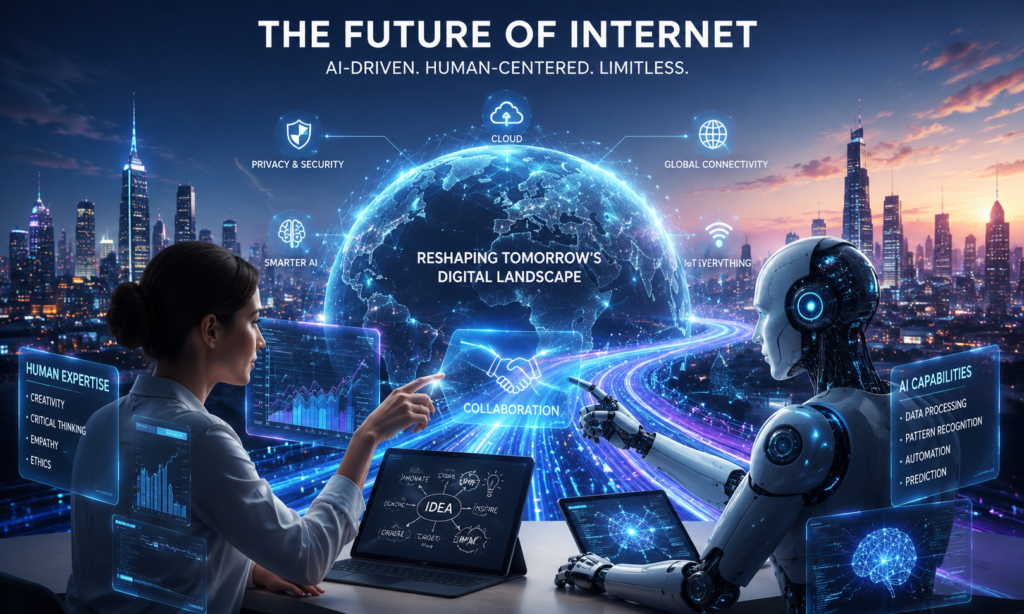
Though we face great challenges, the future is not determined to be negative. In that which is to come technology companies, publishers, governments and users are putting forth efforts to improve content quality and repair trust in the very transformable digital environment. What we may see in the next stage of the internet is a great focus on authenticity, transparency and human expertise.
The Rise of Verified Human Content
As we see an increase in synthetic content, that which is put out by humans may become more valued. Readers are after personal stories, in depth research, professional analysis, and that which is unique which at present AI is not able to reproduce. Publishers may put more stock in verified authorship, professional credentials, and first hand expertise which in turn will see them put forward as the solution to the flood of auto generated material. This may create a premium for what is proven to be true and accurate info and also see to it that creators put out quality over quantity.
Balancing AI Efficiency with Human Expertise
The best performing organizations will probably put in place a mix of AI and human elements in their structure instead of full scale automation. AI will play a role in research, content organization and productivity which in turn will see human experts use their judgment, creativity, critical thinking and fact checking skills. That which we see as a collaborative effort will allow companies to enjoy tech efficiency which at the same time does not trade off against quality or authenticity. Instead of putting out of work human creators’ role may see augmentation by AI which in turn will enable them to put out high quality content at large scale.
Conclusion
The issue of Synthetic Content is that which puts into focus one of the key issues of today’s internet. As AI generated content grows we see the web at risk of being flooded with repeat material, reduced originality, and increasing trust issues. But also what we are headed for is not determined by tech alone but by how we as a society interact with it.
Organizations going out of their way for transparency, authenticity and expert input will see best results in terms of audience trust. Also as we see it, users who develop strong media literacy will be better at identifying what is reliable in the increasing sea of automation we see in digital space. The internet going forward will see a balance between AI powered efficiency and human creativity which in turn will see tech enhance knowledge instead of overloading it.
Frequently Asked Questions (FAQs)
1.What do we mean by the Synthetic Content Crisis?
In the near future, what we may see is the rise of machine produced material on the internet which in turn can have a great impact on the issue of content quality, originality, and trust. Also the present is seeing an over production of synthetic content.
2.AI generated content is growing very fast.
AI technologies which enable businesses and publishers to produce content at a faster rate, reduce costs, and address the ever growing demand for digital info.
3.Does AI generated content have issues?
Yes. AI at times puts out incorrect, out of date, or misguiding info which is a result of not being verified by human input.
4.What is the impact of synthetic content on search engines?
Search engines have trouble with that as we see an increase in the number of AI generated pages.