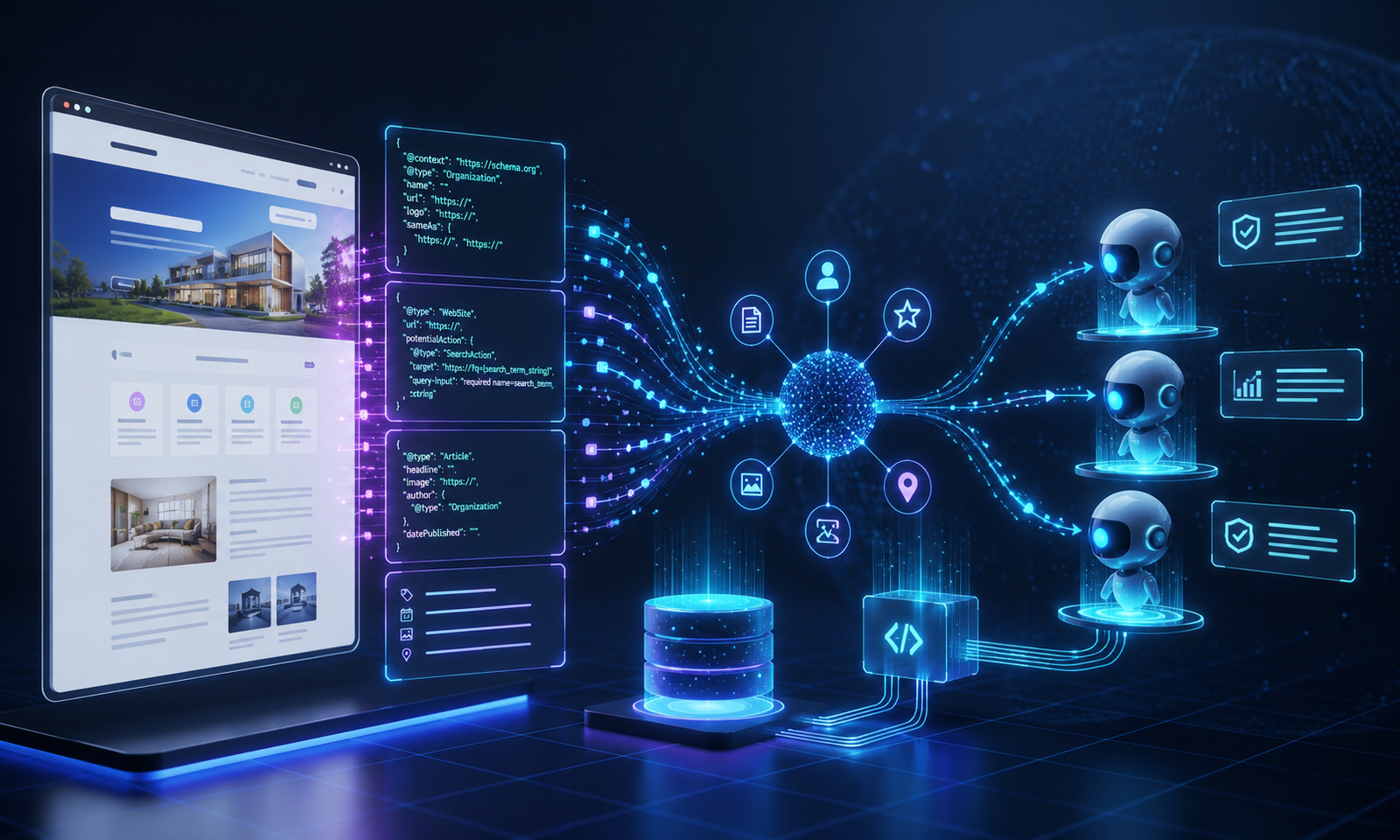
Today, the Internet is a new world and websites don’t just have to be created for human use. AI agents are now becoming the primary users of the Web, with a time frame that is set to accelerate. AI assistants can include comparison features as an alternative to just showing search results, they can book services, summarise information, complete purchases and even make decisions for users. The change will have an impact on websites optimized for human experience as they may slowly fade from the AI-driven ecosystems.
Older SEO’s would hook people on to the search engines. Agent-ready optimization is about ensuring a clear website understanding, trust, verification and action for AI systems. Those who don’t prepare for AI assistants could find out that despite being a top-ranking page in regular search engine results, AI assistants are not visiting their website.
An agent ready website has a design that is suitable for intelligent systems and humans. It not only provides machine-readable data, but rich, transparent content, verified business signals and consistent data which AI can confidently process. With AI agents becoming a growing part of the purchasing process, website design is crucial as well as the quality of the content.
The New Website Visitor Isn’t Human Anymore.
The biggest change in 2026 is not another change in the search algorithm, it’s a different one. It’s when AI agents function as your digital researcher and shopping assistant, without you having to pay them.It’s when AI agents become your virtual researchers and shopping assistants without requiring you to pay for their services. These systems have different criteria on how to assess how trustworthy, accurate, accessible and structured a website is, compared to a human user.
AI agents will be able to navigate sites instead of going through several pages looking for useful indicators that can help them make sure decisions.
Key characteristics of AI-first browsing
- An AI agent will focus on the information, rather than the design, structure.
- They assess various reliable sources and give recommendations.
- AI is better able to comprehend the content when it is ready to read quickly.
- The more business information is verified, the more confidence there will be in making recommendations.
- When there is consistency with data across pages, it can lend to the credibility given to the data.
Contrary to human agents, AI agents are not charmed by pretty graphics, animation or marketing catch-phrases. They are mainly interested in gathering factual data in an amount of uncertainty as low as possible. Organized, verifiable and transparent information that is provided in a web page becomes a preferred source.
Building an Infrastructure That AI Can Trust
It’s not enough to simply add structured data to create a website that is agent ready. All website pages need to be unambiguous and enable AI to be confident in their interpretation.
Key principles of making AI accessible.
- Be consistent with information about the brand from page to page.
- Make it public how to identify the authors/identity of business.
- Apply semantic HTML, and use a content hierarchy.
- Stay in tune with information about products/services.
- Have clear policies & contact details.
All of these elements contribute to the trustworthiness of a website and whether or not an AI agent should cite, recommend, and/or use the website in automated tasks. The more discriminating the AI systems get, the more it becomes crucial to have technical clarity.
Semantic Content is machine understanding.
While human readers can read and comprehend the context based on their experience, AI systems need a lot of context cues: semantic relationships between the ideas. Correct organization of content, entity-richness, paragraphs and description, etc., aid AI in the understanding of meaning correctly.
Websites need to naturally discuss concepts when packing some keywords into the content, it’s a bad idea. The sections need to address a particular question, eliminate ambiguity and create context. The benefit of semantic writing is that it also makes it easier to read for people, improves search ranking and boosts the chances of being found in AI-generated answers.
Trust Signals are becoming Ranking Signals.
When recommending a website, the AI agent analyzes and scores the credibility of the site. They study and judge the factual consistency, the experience of the author, transparency of the publication, business legitimacy and external references.
A trustworthy site will have information regarding the company, authors, privacy policy, editorial procedures, customer help contact and the fact that it’s updated regularly. The following are a few examples of such trust indicators that help increase AI systems’ confidence and decrease uncertainty when making automated suggestions. Even if a website is ranking well, there’s a possibility that over time, it can fall out of the answers generated by AI if it lacks trust signals.A site may have a good ranking but not have trust signals on the website to be phased out of the answers generated by AI over time.
Structured Data Drives AI Decision Making
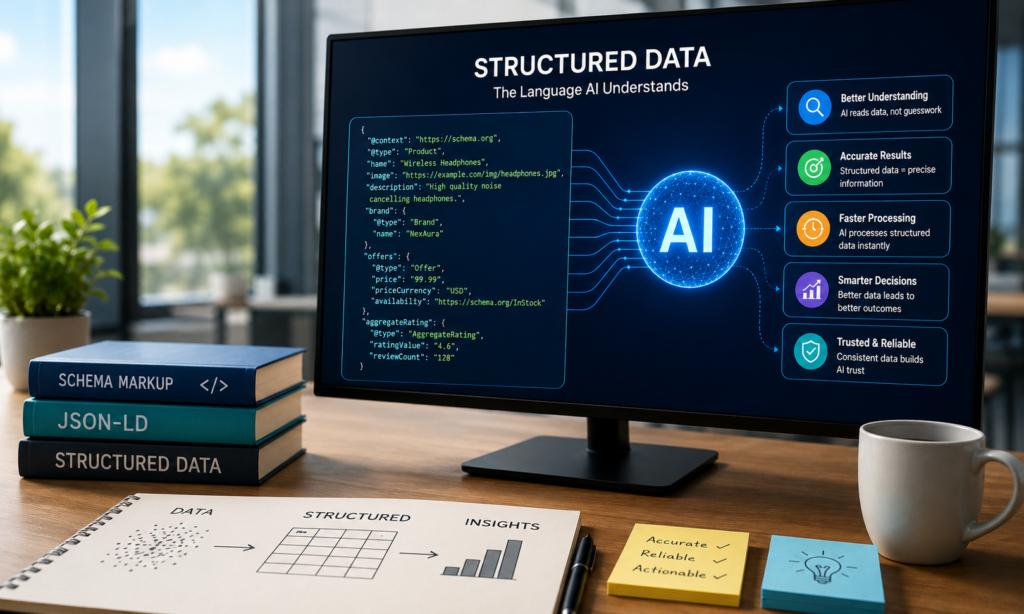
While schema is still beneficial, AI systems are now more likely to take in the overall information structure instead of just structured data.
The product specifications, pricing, FAQs, organization and information, reviews, availability, contact information and business locations should be synced on all the pages. With structured information corresponding to the visible content, AI agents can better verify the information and take fewer steps to make sure it is accurate.
More visibility within AI assistants that recommend products, comparison of services or answer complicated queries from users.
Performance Matters Beyond Human Experience
While rapid websites have always enhanced consumer experience, technical effectiveness is additionally critical for AI agents.
AI crawlers can quickly extract information from websites that are well-coded, responsive, have optimized media, encrypted (HTTPS) and have good uptime. Excessive JavaScript, hidden content, broken links and inconsistent navigation are technical barriers – which decrease the accessibility of AI.
Now it’s possible to optimize performance, for both users and self-aware digital helpers.
Conclusion
One of the biggest changes in digital in 2026 will be the progress made from search-first websites to agent-ready websites. Businesses are no longer able to optimize for human visitors as AI agents are quickly becoming a trusted source of information for shoppers, researchers, travelers, professionals, healthcare and finance audiences.
To be successful in this new environment one needs to be clear, transparent, have a semantic structure, be technically good, and have verified information. The best websites will receive more AI citations, recommendations and conversions by having exceptional human experience with machine-readable intelligence incorporated. The next generation of digital assistants may be unaware of those that stick to the old ways of SEO.
Frequently Asked Questions
1. What is an agent-ready website?
The aim of an agent-ready website is to ensure that information is easily understood, verified, and utilized by AI agents to provide answers to queries, offer product suggestions or automated tasks.
2. What is different about agent-ready optimization as compared to traditional SEO?
Traditional optimization has been about ranking in the search engines, and human clicks, whereas agent ready optimization would be focused on machine understanding, structured information, trust signals and semantic clarity.
3. Will there be search engines in the future?
AI agents are anticipated to supplement and revolutionize search—don’t be afraid; it’s not going anywhere. A number of search services are already adopting AI helpers to their experiences.
4. What are the first industries that need to be prepared?
B2B businesses such as e-commerce, SaaS, finance, health, education, travel, legal, and local companies are likely to benefit from the sooner effects of AI-recommended suggestions.The industries that will be hit first with the benefits of AI-recommended suggestions are likely to be businesses in e-commerce, SaaS, finance, healthcare, education, travel, legal, and local businesses.
5. How to be ready for Web experiences that are AI first?
There is a need for businesses to enhance their semantic content, have structured data, bolster their technical performance, publish their business information openly and have consistent trust signals at their websites.