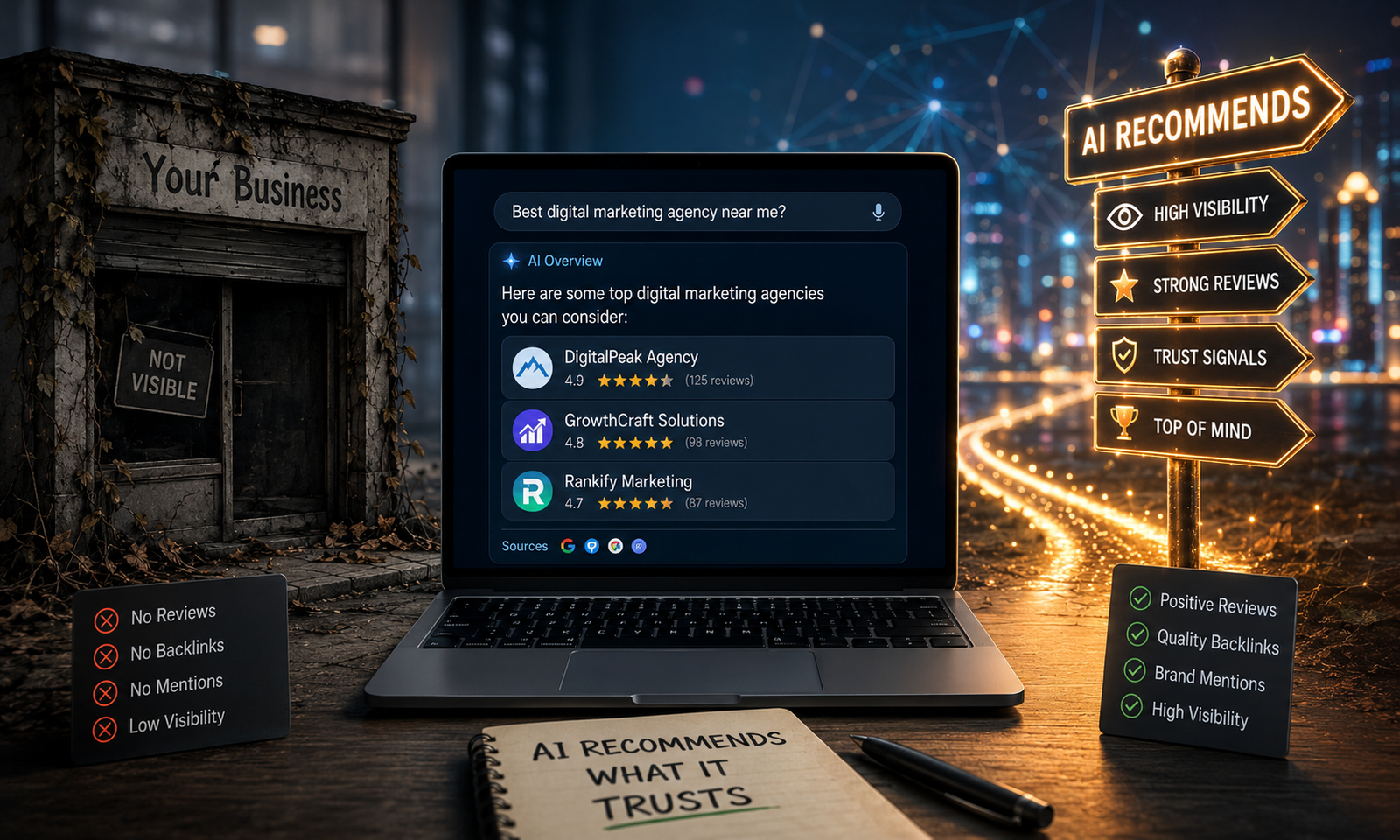
How people find brands, products and services is undergoing the transformation process of AI. Users no longer go to 10 different browser windows to do this comparison to find the top software, agencies, doctors, hotels, or local businesses, instead they are now asking AI assistants to recommend the best among the various options. The list of trusted companies provides them with the answer and that’s not necessarily all the companies out there.
This has brought about what is now an invisible issue that many businesses have not been aware of: AI Recommendation Gap. A business can be a good ranking on search engines, but may be missing due to the recommendations provided by AI systems. Owners concentrate on optimizing keyword rankings, while AI models weigh the credibility, consistency, authority, and entity recognition of businesses, along with their reviews and structured information, to determine which ones are relevant for showing up in business responses.
The Invisible Selection Process that’s taking place before a customer visits your site.
AI assistants aren’t just a search engine that presents the results. They are responsible for reviewing information gathered from several trusted sources to identify which businesses are more reliable, for a specific request.
AI Generates Confidence, Not Matching Keywords.
An AI assistant doesn’t only look for words that match when asked by a user for a cybersecurity firm or marketing company recommendation. Takes its effort to find digital reputable businesses.
AI reviews signals like brand mentions in trusted media, uniformity of brand data, reviews from customers, industry recognition, organised data on websites, topicality and authoritative backlinks. When there is more evidence by the competitors in these aspects, then the AI is more confident to recommend them.
Companies are often “in the middle of nowhere” when it comes to information.
There are a lot of companies that think that they have a professional website, so they’re getting by. Unfortunately, AI is not limited by one source of information, but is reliant on information all over the web.
AI may not be as sure of your business’s identity if you have a few citations, or even older ones, with inconsistent contact information, a lack of structured data, and just a few mentions on reputable websites. This uncertainty will make it more likely for competitors to be recommended, rather than the competition.
People trust the signals and make recommendations based on them.
Consistent publishing of expert content, such as being mentioned by authority on the subject sites, getting positive customer feedback and having the right business information is a huge strength in creating digital trust for businesses.
These trust signals are crucial for AI systems to understand as indicators of trustworthiness for a company. As time goes on, businesses with a greater digital authority are “recommended” over and over on various AI platforms.
How to fill the gap when you’re ahead of the competition when it comes to AI Recommendations.
However, as opposed to conventional SEO, resolving the AI Recommendation Gap needs to enhance your digital identification, not simply particular key phrases.
- Ensure that there is consistency in business data, all over trusted directories and industry platforms.
- Write authoritative articles, which give detailed answers to customer’s actual inquiries.
- Make your sites in the industry authoritative and gain citations, mentions.
- Structured schema markup – it guides AI to clearly understand your business.
- Solicit real Customers Reviews from a variety of reputable review sites.
Entity Recognition Is Becoming More Important Than Keywords
Nowadays, AI recognizes businesses not just as webpages, but as digital entities as well.
As your company is always associated with a set of services, industries, products, locations and expertise in various authoritative sources, AI gets a better understanding of your brand. This will help increase the chances that you’ll be recommended instead of being unknown.
Topical Authority Creates Recommendation Momentum
Frequent and consistent original research and analytical articles, guides, industry insights and education materials help businesses stand out as experts over the long-term.
Rather than creating blog posts based on keywords that spur of the moment have a somewhat broad or similar meaning, successful companies develop their own content ecosystem, which is centered around the services that they offer. AI is able to ‘see’ these patterns and now more often is connecting these businesses with the subject matter.
Your online identity isn’t limited to your website.
AI gathers data from business listings, professional communities, case studies, reviews, interviews, news articles and social conversations.
A company with good external validation, will seem more trusted than a company that only has their website content. The wider web’s authority in the building process can greatly boost the potential of AI recommendations.
Early adapters of this AI discovery layer will be the companies that own it.
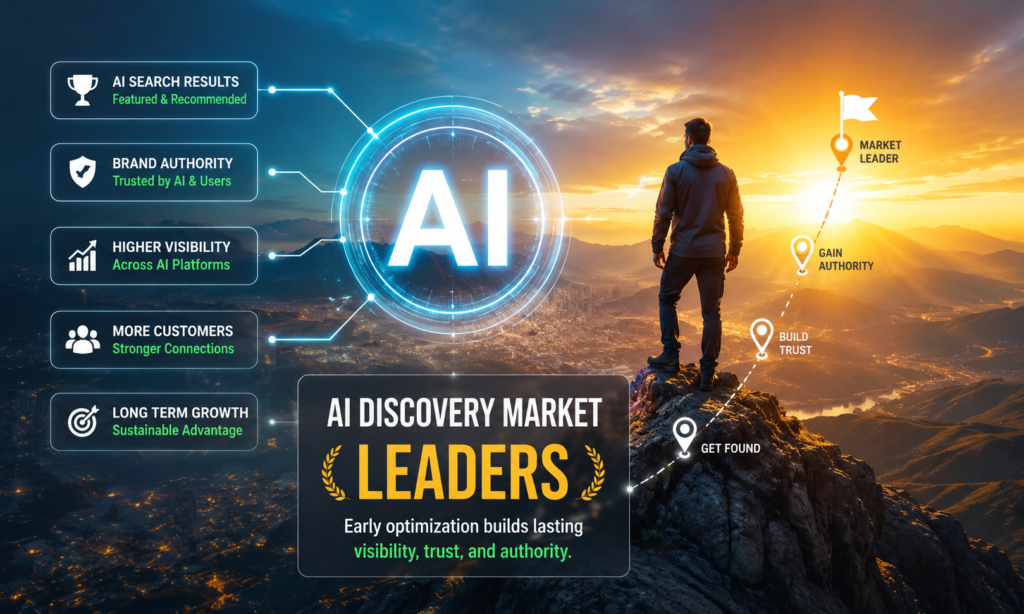
The Internet is moving towards a new age when it comes to recommendations. AI assistants are becoming more popular among customers because they feel more confident that they will filter out the options when making a traditional search. That means that now it’s not just the search engine results page that you need to focus on – it’s the answers generated by AI too.
By investing in building authority, organizing information, producing trustworthy citations, their Digital Reputation and optimizing their entities, organisations will slowly improve their AI presence. For the traditional SEO tactics user, they may find out that users aren’t even getting to their website before they get recommendations from their competitors.
Conclusion
One of the largest visibility challenges that businesses face is the AI Recommendation Gap. Without AI assistants being able to identify your business and make sure that they are recommending it, ranking on search engines doesn’t make any sense anymore. Companies that establish entity recognition, produce authoritative content, have up-to-date information, gain trusted citations, and have a solid online reputation are much more likely to be included in the AI-generated recommendations. This gap will directly impact future traffic, leads and business growth of an enterprise as AI is now the starting point to discover customers.
FAQs
Q1. What is the artificial intelligence (AI) Recommendation Gap?
The AI Recommendation Gap is the opportunity an AI Assistant offers to a business that isn’t already present on conventional search engines. Despite having good rankings on Google, many businesses are not showing up in the recommendations generated by the AI due to a lack of trust signals and/or authority.
Q2. Why is AI suggesting other businesses to compete with my business?
When AI detects more compelling evidence of expertise, credibility, consistent business information, authoritative mentions, structured data and positive reputation from a variety of trusted sources, it recommends the competitors.
Q3. Does SEO still work the traditional way or is it necessary to account for recommendations by AI?
While traditional SEO is still important, AI also takes into account factors like entity recognition, digital reputation, structured data, authoritative citations, and trustworthiness when advising businesses.
Q4. What are the best ways for businesses to enhance AI recommendations’ visibility?
Topical authority, schema markup, consistency of business information, high quality mentions, customer reviews & authentic, expert content creation should be among business priorities.
Q5. What will be the role of search rankings in comparison to the AI recommendations?
As individuals increasingly turn to AI assistants for shopping, the recommendations provided by AI are likely to become a key factor in their shopping. Organizations with an optimized website will enjoy the best competitive edge, both in terms of search engine optimization (SEO) and artificial intelligence (AI) discovery.