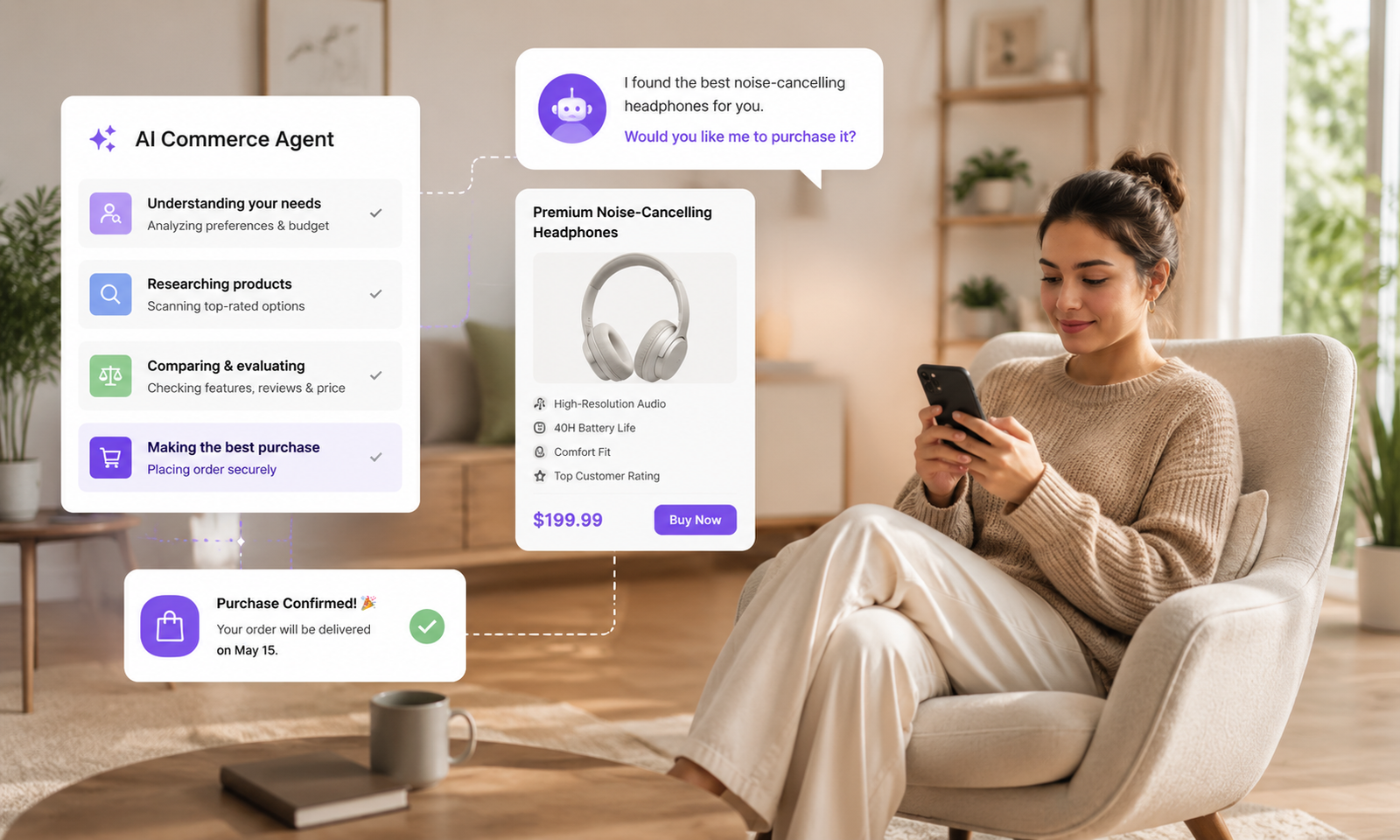
AI agents are making their way into the real world and now assisting with the decision making process.Digital commerce is at a significant transition period as AI Agents become more than question-answering tools and start to help customers make purchase decisions. These systems can not only find out information, but additionally research products, contrast options, research reviews, check costs and determine products that satisfy a shoppers needs.
The ecommerce customer experience is likely to change, as it is often taken for granted that it will remain the same as it always has been. Customers no longer have to go to countless sites, compare a host of products and then read through hundreds of reviews. A few of these questions might be answered by an AI agent, and could present a more limited set of relevant options.
AI Agents are revolutionizing the product discovery journey.
The typical ecommerce journey involves users performing a search, browsing through the products, filtering the results, comparing products and then taking an action such as adding to cart and purchasing. AI agents can bundle up a lot of these steps, and make a much more succinct decision making process.
- AI agents scour several sources of products in an instant.
- Competitive pricing, features, ratings and delivery is done automatically.
- Suggestions are compatible with the preferences and budgets.
- Agents filter hundreds of products down to the right ones.
- Users can provide suggestions with a smaller number of steps.
The research of products from human browsing to machine evaluation.
AI agents can interpret complex purchase queries and assess the products based on specific criteria. The agent might be able to search for products that fit within the shopper’s budget, have features he/she is looking for, use for, and delivery date.
The system can not only return long lists of search results, but can also compare the options and provide an explanation on why some products are better suited. This is even more crucial for ecommerce businesses as they need to have detailed and accurate product information.
AI Recommendations May Turn into a New Ecommerce Gateway.
AI agents might be a key link within the ecommerce enterprise and customer base. An AI system could narrow down the selection of search results and provide a comparison between the products; rather than shoppers being able to choose which ones to open, the AI would determine which ones to open and tell them about the differences between the products.
With the traditional visibility now being altered, as could the importance thereof. A product can be good in the search results but not get the AI “recommendation” because of superior specifications, more positive reviews, lower prices or better product fit to the shoppers’ needs.
Product Information is now a part of the sales strategy.
Product information isn’t just an additional add-on to the visitor to the site. It can also be used to feed into the AI systems to ensure they can understand and accurately compare products.
Product specifications, pricing, product availability, shipping information, warranty information, compatibility and return policy should be clearly communicated and updated for the retailers. Smoothly integrated information on various platforms can also help in the product’s evaluation.
The AI decision layer will become a space of ecommerce competition.
The addition of AI-powered commerce to the mix is another obstacle between brands and customers. While businesses will still need to have robust websites and marketing campaigns and have a great customer experience, their products will also need to have an intelligent system’s evaluation rating that is high.
- Clarify product information to enable AI to grasp the products.
- There are also other signals of trust – such as customer reviews.
- Competitive pricing is the key to making products more appealing, when comparing prices.
- The positioning of a product is its distinctiveness; it’s helpful when it would justify its existence.
- Automated shopping can be facilitated with Connected commerce systems.
SEO Will Surpass Search Visibility.
Traditional SEO is just about assisting web pages to appear in search engine outcomes. There’s another factor to consider in agentic commerce: products must also be readily comprehensible and comparable to AI systems, and easily recommendable.
Structured data, product descriptions, reviews, entities, product comparisons and authoritative information could be more relevant. Ecommerce companies might then have to optimize their content for relevant keywords, as well as clearly machine-readable product data.
Reputation and reviews may impact on automated decisions
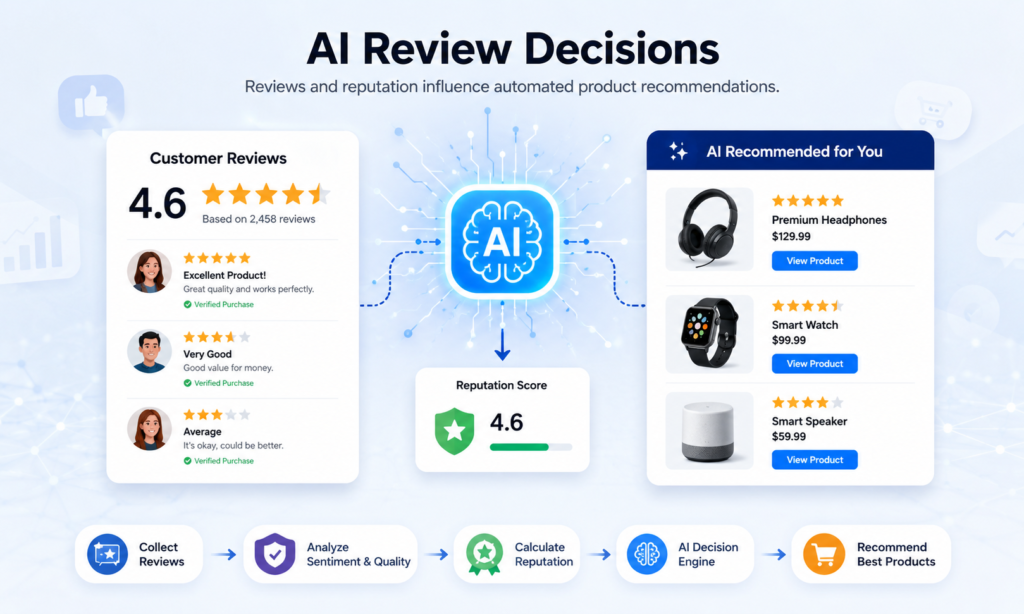
AI agents can have the ability to go through a ton of consumer comments, as they assess products. They can spot any issues that people are complaining about, find common strengths, reliability issues and overall customer satisfaction.
That’s why it’s all the more vital to consider authentic customer experiences more and more. If complaints about product quality or service continually come across the transom, then no amount of marketing is going to be able to save the day for a brand.
The availability and price could become real time decision factors.
AI agents may be able to factor in information which might change during the day such as product pricing, discounts, inventory and delivery times.
What looks like a very competitive product at this time could be no longer desirable if its price goes up, or if there is no stock of it available. Retailers will, therefore, have to provide accurate product feeds and commerce information and update these feeds frequently.
Brands will have to optimize for humans and machines.
Rise of AI agents doesn’t mean less importance on Human customers. Rather, ecommerce companies might have to cater to both their consumers and the AI system aiding their consumers.
Product pages need to be convincing, understandable and have accurate information for machines to understand. This makes it necessary to have a combination of SEO, product data, content quality, reputation, pricing and technical infrastructure (etc.).
Conclusion
AI agents are transforming digital commerce from a browsing experience to one that is more automated, with decisions made by AI. The classic relationship between shoppers and retailers is slowly evolving as software is able to research products, compare the alternatives, review the product and make a purchase.
But, for ecommerce companies, it could be more than traffic and rankings that determine their successes in the future. The correctness of the product information, the rating of the products, the prices, availability of the product, the policies and the value the product offers may all be factors in how likely it is that an AI agent will recommend a product.
FAQs
What are AI shopping agents?
AI shopping agents are the smartest and able to conduct research, compare products, evaluate customer needs, and help with the purchase process.
How can AI agents change online shopping?
They can automate the product research and comparison, limit the number of products offered to consumers and make a suggestion based on the individual needs.
Will Ecommerce search be replaced by artificial intelligence agents?
While browsing might not be as prevalent as before, traditional search engines, markets and ecommerce sites are expected to play a role in facilitating product discovery in shopping journeys.
Why is product data important for AI commerce?
To make a sound judgment, it is crucial that the AI systems have the correct information about product specifications, price, availability, shipping terms, warranties and more.
How can retailers prepare for AI shopping agents?
To get ready, retailers should ensure they have up-to-date product information, enhance their structured information, develop robust product reviews, establish clear product content and set clear policies.