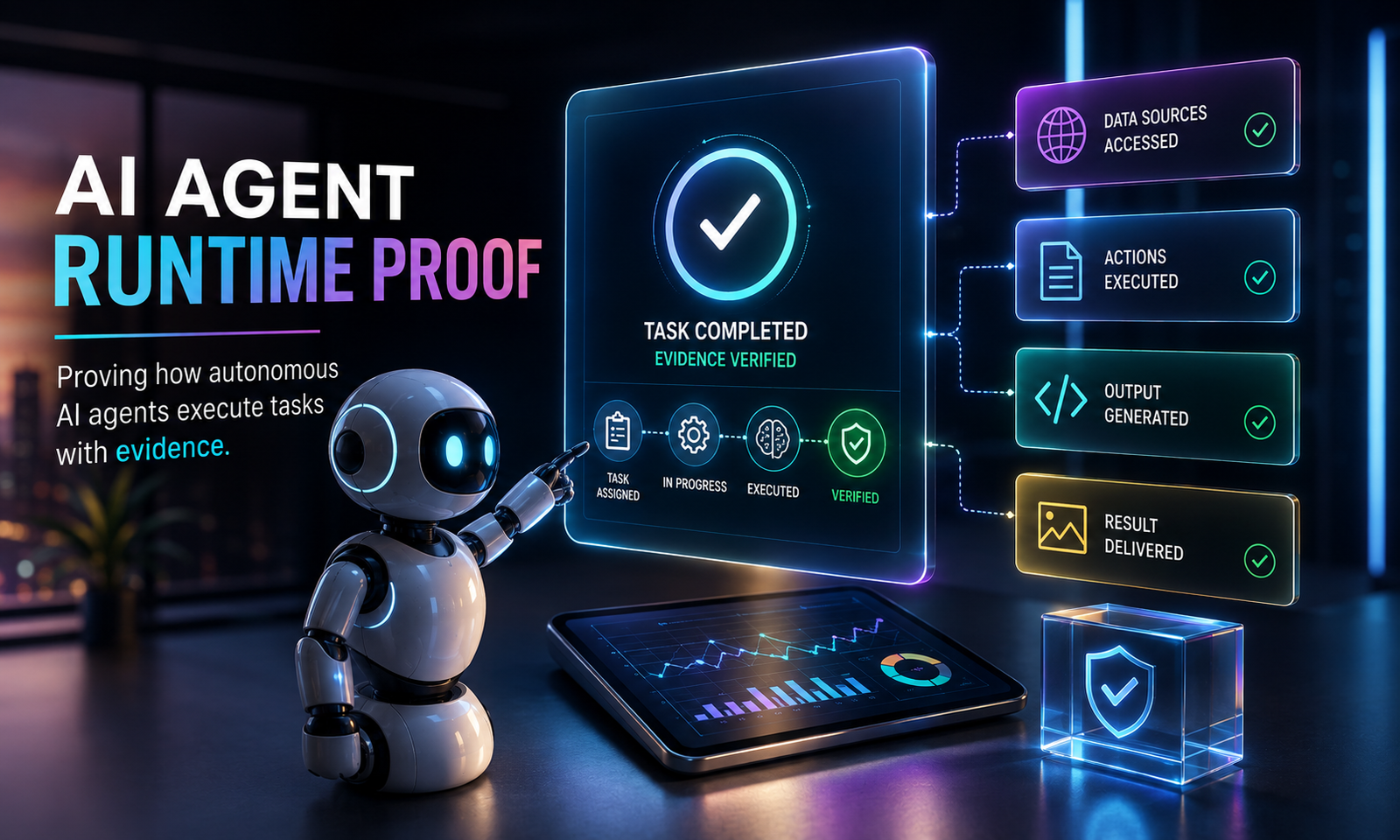
AI agents are now going beyond the capabilities of simple question answering to autonomously executing tasks. They can learn skills, operate tools, retrieve information, and follow workflows,involving multiple steps, without too much human interaction. With increased efficiency of agents, one of the pressing questions is: How do organizations show the actual work done by an AI agent?
It’s not sufficient to give a final answer. The agent could do a convincing job with a tool that it wasn’t designed to work with, miss a step in the process, or otherwise go outside of its scope of permission. This is driving the need for AI Skill Runtime Intelligence – the capability to understand, and even verify, what’s going on as an AI Skill is running.
The AI Control Point is becoming the Runtime.
The runtime converts the reasoning to actions, with the help of AI models. If an agent leverages more than one skill and/or tool, the runtime draws connections between decisions, permissions, calls to the tools and the outcomes.
That makes it necessary to build infrastructure which will be capable of “rebuilding” an agent’s execution “trail” rather than just capturing the end result of what the agent responded to.
Skills Are Becoming Executable AI Building Blocks
The skills can be packaged up into a reusable capability using AI skills. These capabilities are dynamically selectable by agents, based on the task.
But, using a skill does not make it evident that it was used correctly or followed. Runtime intelligence enables to differentiate between the capability presence from actual capability execution.
Final Answers Cannot Prove Agent Behavior
A final response is what an agent wants users to see; not necessarily all of the events that may have occurred prior to the final response. There may be many subtle decisions and interactions with tools in multi-step agent workflows.
Through runtime evidence, these actions are linked and organizations can get insight in how a result was achieved and if the desired workflow was executed.
Five Runtime Signals that Indicate Agent Activity
There are five signals which give a better indication of what real agents are doing:
- Skill discovery: If the skill was discovered – whether it was the right one.
- Skill activation: If the activation of the chosen skill was successful or not.
- Followed the intended work flow: Instruction adherence
- What APIs, files or systems were used during the execution of the tool?
- Outcome verification: If the outcome can be verified, independently.
The following signals enable an understanding of the events in terms of execution and make them more usable. Teams don’t have to take an agent’s word for it that a skill works, they can determine that for themselves.
They also help to make debugging easier because they indicate if it was a skill selection, instructions, tools, permissions or outcome validation problem.
Runtime Evidence creates an Execution Story.
Basic Logs can be used to prove that an event was (or was not) executed while Runtime Intelligence can be used to tie events to the bigger task. It can detect the different skill which caused a tool call, the different permissions that were active and what happened after the tool call.
This is particularly useful when dozens of actions are performed by an agent prior to completing just one workflow. Teams can review all the logs without the need to look through disjointed logs.
Agent Identity must follow all actions.
When users, workflows, or agents are gaining access to the business systems, organizations should know which agent, user or workflow had triggered an operation.
The linkage between identity and run time evidence with the added accountability. Change to a document, or call an API by an agent can be mapped to the workflow that they’re responsible for, rather than being an anonymous AI operation.
Five Proof Layers for Trustworthy Agent Execution
A dependable agent environment can make use of the five associated proof layers:
- Identifier for the workflow: the person who started the workflow.
- Resources deployed: Capability proof – which skills and tools were available.
- Execution proof: Any actions performed, and the order of the actions.
- Which permissions/restrictions were in place – known as policy proof.
- Outcome proof – whether or not the expected outcome materialized.
These layers combine to go from monitoring enterprise AI to proving enterprise AI. Organizations can now check for an agent’s task completion, and determine if it was done correctly.
This is more critical as agents are deployed in environments that have high levels of criticality around the business, where failing or unauthorized actions could have serious repercussions.
Security Toward Runtime Behaviour
Static inspection will give you an idea of the purpose of a skill, but won’t always give you an idea of how a skill will act when it is given real prompts, data, tools and permissions.
Runtime Monitoring adds an additional layer of security and alerts to unusual access to data, permission issues, unexpected tool calls or workflows that differ from those that have been approved.
Why the Agent Race Is Moving Below the Model
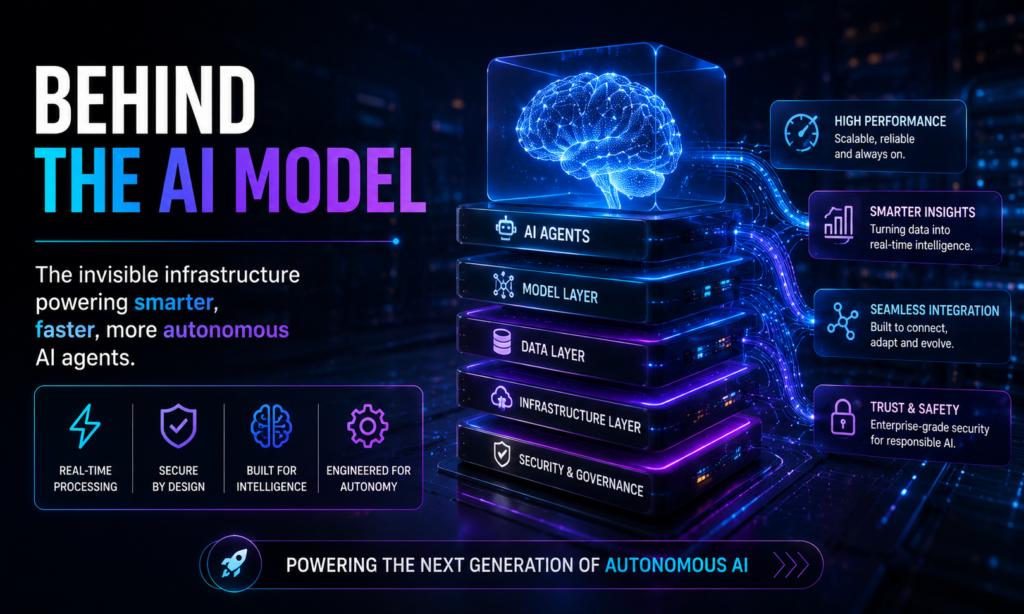
Quality of the model will be critical but autonomous AI is increasingly reliant upon the infrastructure that supports the model. After the model decides to act, it’s influenced by such things as skills, identity, tools, permissions, tracing and runtime governance.
Even two organisations with models of a similar capability can have different outcomes, one of which might have stronger controls and be better informed about the behaviour of the agents and hence have more convincing evidence.
Executing AI Enterprise Solutions with Verification.
Not all businesses will be able to get an explanation of its actions from an AI. Records of all the accesses to and changes made on the important workflows may be necessary.
Runtime intelligence adds that missing dimension by linking decisions to observed actions, and facilitates easier, self-service auditing and governance of workflows.
They could turn out to be a competitive edge for proof.
As agent platforms get more developed, enterprises could consider other factors, in addition to model performance. Tracing, identifying, and policy controls, skill visibility, and outcome verification may become new criteria to consider.
Conclusion
AI Skill Runtime Intelligence is not just a recognition of AI output; it’s a shift to understanding the whole life cycle of autonomous AI output. Businesses will require evidence of skills learned, actions taken and what was allowed and confirmed as agents learn more skills and gain access to more real world systems.
FAQs
1. What is AI Skill Runtime Intelligence?
AI Skill Runtime Intelligence is a way to track and reconstruct the discovery, activation, execution and completion of skills for the AI Agent while at runtime.
2. Why is runtime intelligence important for AI agents?
AI agents have the ability to execute a multitude of actions before coming up with a final response. With runtime intelligence, it’s possible for organizations to check those actions not just for the final answer.
3. What are the differences between runtime intelligence and AI observability?
Typically, the types of events, errors, latency and traces that are monitored under AI observability. Runtime intelligence can do more than just that, though: It can analyze those events and determine if the agent has been executing its script as designed.
4. Can Runtime Intelligence enhance AI security?
Yes. Unexpected calls to tools, unapproved access to data, permission issues and deviations from approved workflows are all potential findings of runtime monitoring.